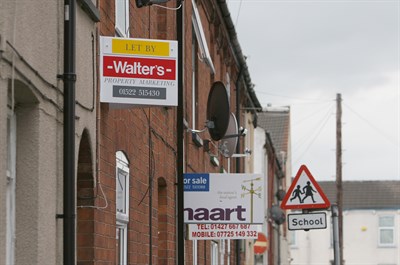
 Vendors who instruct multiple estate agents are significantly less likely to secure a sale, with properties taking longer to sell and achieving lower prices, according to new research.
Analysis by TwentyEA found that multi-agency listings were 46% less likely to sell than properties marketed through a single, first-time instruction.
They were also 56% more likely to undergo a price reduction, took 64% longer to sell and achieved 3% less than their original asking price.
The findings, published in TwentyEA’s Q3 2026 Property & Homemover Report, challenge the assumption that instructing several agents improves a vendor’s chances of selling.
The research examined property instructions from the beginning of 2025 through to 2026.
More than 80% of new instructions involved properties entering the market without a previous listing. Around 10% came from vendors who had switched agents, while 9.4% involved multi-agency instructions.
The likelihood of securing a sale varied considerably.
Just 31% of multi-agency properties sold, compared with 44.5% of properties where vendors had switched agents.
Properties marketed by a replacement agent were themselves 22.5% less likely to sell than those entering the market for the first time.
Lower sale prices and higher fees
The financial implications for vendors could be substantial.
Based on an average UK instruction price of £438,300, a sale achieved at 3% below asking price would represent a shortfall of approximately £13,200.
Multi-agency agreements also tend to carry higher commission rates. These are often around 3%, compared with approximately 1.5% for sole agency instructions.
That leaves vendors potentially facing a double financial hit: a lower sale price and higher agency fees.
Nick Huntley, director at TwentyEA, said repeated listings could also undermine buyer confidence.
He commented: “Buyers are drawn to fresh stock. The prospect of discovering a newly listed property can generate excitement, particularly among those actively searching.
“But when the same property appears across multiple agents, its appeal can quickly fade. Rather than generating interest, repeated listings can raise questions about why it hasn’t sold, creating doubt where there may otherwise have been none.
“Multiple listings can also signal a seller’s desperation, potentially inviting lower offers.”
London dominates multi-agency instructions
The research also reveals significant regional differences in the use of multiple agents.
London accounts for the six postcode areas with the highest proportions of multi-agency listings.
North West London leads the rankings, with 21.6% of properties marketed by more than one agent.
West London follows closely at 21.3%.
Outside the capital, Southend-on-Sea ranks seventh, while Jersey takes ninth place. Watford completes the top ten.
The figures suggest multi-agency instructions are particularly prevalent in London’s more competitive property markets.
More agents, slower sales?
Speed is often cited as a reason for instructing multiple agents. However, TwentyEA’s findings suggest the strategy may not deliver the expected results.
Multi-agency properties took 64% longer to sell than first-time instructions.
Managing several agents can also complicate the sales process. Vendors may need to coordinate multiple viewing schedules, while agents face potential issues over accountability and communication.
Huntley added: “For estate agents, the challenges of multi-agency are well recognised. While greater exposure may sound attractive to buyers, our findings suggest it does not necessarily translate into better outcomes.
“For agents advising vendors who are considering this route, the statistics provide a valuable starting point for a more informed conversation about the potential impact on sale price, timescales and the overall selling experience.”
The findings show a strong association between multi-agency marketing and poorer sales outcomes. However, they do not establish that instructing multiple agents directly causes properties to sell more slowly or for less money. Vendors may turn to multi-agency arrangements after a property has already struggled to attract buyers.