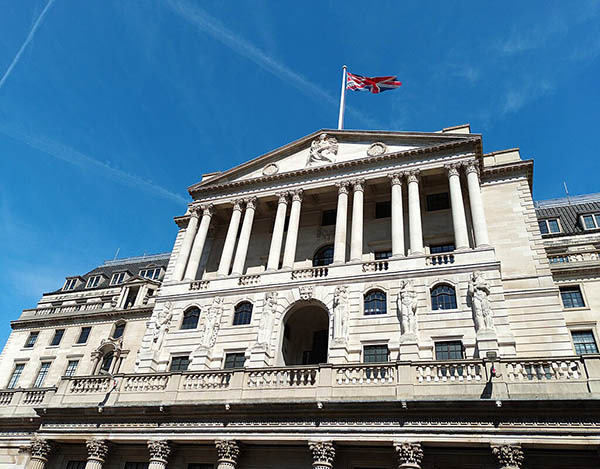
 At the start of 2026, expectations were firmly set on interest rate cuts from the Bank of England, with debate centred on timing and scale. That outlook has shifted following the outbreak of the Iran war.
Higher energy costs linked to the conflict have pushed up inflation expectations and added uncertainty to the economic outlook, prompting policymakers to reassess the path for rates. Markets have moved from anticipating cuts to expecting a longer period of elevated borrowing costs, with the possibility of further increases if inflation persists.
At its 19 March meeting, the Bank held rates, with governor Andrew Bailey stating that it “stands ready” to respond to inflation pressures. Other members of the Monetary Policy Committee signalled that rates could remain higher for longer, or rise if required.
Market expectations reacted sharply in the aftermath, with futures briefly pricing in multiple rate increases this year before moderating in subsequent weeks.
Against that backdrop, attention turns to today’s decision. While a rate rise remains possible, expectations have largely settled on a hold, with policymakers likely to wait for clearer inflation data before taking further action.
Markets expect the Bank’s Monetary Policy Committee to keep the base rate unchanged at 3.75%, following recent signals from Bailey that a near-term increase is unlikely. However, after a unanimous decision to hold rates last month, the vote could be more divided this time, reflecting rising inflation risks and stronger-than-expected business activity.
Nicholas Mendes, head of marketing at John Charcol, commented: “A split vote looks likely, and in some ways the vote split may matter almost as much as the headline decision itself.
“Markets are already pricing in a higher rate environment. Two, three and five-year SONIA swaps are all sitting around 4.18% to 4.21%, and the forward curve points to 3-month SONIA moving higher over the coming months rather than falling back quickly. That suggests markets are not treating current rates as the end point.
“The questions now are when any increase comes, how high Bank Rate ultimately needs to go, and how quickly the Bank feels it needs to act.
“My view is that a rise this week should not be ruled out. If the MPC accepts that rates are likely to have to move higher, there is a case for acting now rather than waiting until the next meeting on 18 June. Waiting another seven weeks risks allowing further inflation pressure to build and could increase the chance of a larger move being needed later.
“If the Bank does hold, borrowers should be careful not to read that as a clear signal that mortgage rates are about to fall. A tight hold, for example a 5-4 vote, would still be a hawkish hold. It would tell the market that the Bank is only one vote away from raising rates, and that is not the sort of backdrop that usually gives lenders the confidence to cut aggressively.”