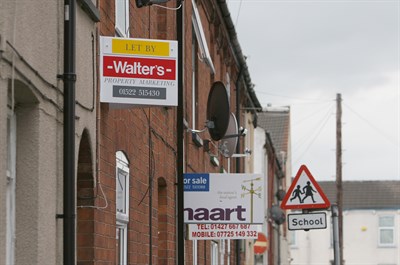
 More than 8,500 properties with tenants in situ are currently up for sale across England, new analysis suggests.
The Letting Partnership (TLP) estimates that 8,553 tenanted homes are on the market. They account for 1.8% of the 470,922 properties currently listed for sale.
The figures highlight the number of existing tenancies potentially changing hands between landlords.
TLP says agents involved in these transactions need to ensure deposits, rent payments and client money transfer correctly to the new landlord.
Northern regions lead tenanted sales
Yorkshire and the Humber has the highest proportion of tenanted properties for sale.
Around 1,575 are currently on the market, accounting for 5.1% of available sales stock in the region.
The North West has the largest number, with 2,227 tenanted properties listed for sale. They represent 4.6% of available stock.
In the North East, 601 tenanted properties are on the market, equivalent to 4.3% of listings.
The picture is markedly different further south.
Just 0.3% of available properties in London are being marketed with tenants in situ. The proportion stands at 0.7% in the South West and 0.9% in the South East.
Agents urged to check financial records
Buying with a tenant in place can allow a landlord to receive rent immediately and avoid an initial void period.
However, the transaction also transfers an existing tenancy and its financial history.
TLP says agents should check the tenancy deposit and establish how the existing protection arrangements will transfer or require re-registration.
They should also reconcile the historic rent ledger. This will establish whether the tenant is up to date or whether any arrears or other balances remain.
Completion dates can create further accounting issues.
If completion occurs part-way through a rental period, the tenant may already have paid rent to the outgoing landlord or agent.
The parties may therefore need to apportion the rent to reflect the period for which each landlord owns the property.
TLP says a clear audit trail should cover deposits, rent received, outstanding balances and other relevant financial information.
The company argues that while ownership can change on a single day, the financial history attached to an existing tenancy does not start again from zero.