
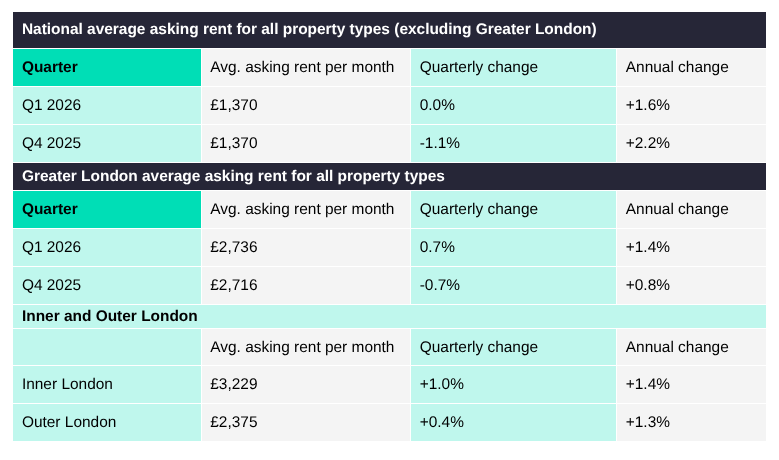
Average rents outside London flatlined at the start of 2026, marking the first time since 2017 that prices have failed to rise between the final quarter of the previous year and the first quarter.
Data from Rightmove shows advertised rents outside the capital remained unchanged at £1,370 per calendar month in Q1, although they are still 1.6% higher than a year earlier – the slowest annual growth since 2018.
In London, rents continued to edge upwards, rising by 0.7% over the quarter to £2,736 per month, though remaining below the peak seen in the third quarter of 2025.
The slowdown in rental growth reflects a more balanced relationship between supply and demand, with tenants facing affordability limits after several years of sharp increases. At the same time, a modest rise in available stock has eased competition.
The number of homes available to rent is now 3% higher than a year ago and at its highest level for this time of year since 2021. However, there has been no surge in new listings ahead of the Renters’ Rights Act coming into force on 1 May, with new rental properties in March down 6% compared with a year earlier.
Demand pressures have also eased. The average rental property now receives eight enquiries, down from 11 a year ago and significantly lower than the peak of 29 recorded in 2022, although still above pre-pandemic levels.
Pricing has become more sensitive as a result, with 26% of rental listings seeing a reduction while advertised – the highest proportion recorded by Rightmove since it began tracking the measure in 2012.
Recent lending data suggests some support for supply, with UK Finance reporting that the total number of buy-to-let loans was 14% higher at the start of 2026 compared with the start of 2025, including an 18% rise in remortgages year-on-year. However, this data covers only January and predates more recent increases in borrowing costs.
Rightmove said rising buy-to-let mortgage rates since the outbreak of the war in Iran are adding further pressure on landlords. The average two-year rate for a landlord purchasing with a 25% deposit is now 5.79%, up from 4.86% prior to the conflict.
Colleen Babcock, property expert at Rightmove, said: “Rents holding steady this quarter reflects how affordability remains stretched, but also how supply and demand is more balanced. With more homes available to rent and less competition between tenants, landlords are needing to position rents correctly for the current market to secure a tenant.
“As market conditions rebalance, homes are taking longer to let. The market is more price sensitive, with landlords needing to be realistic from the outset to secure a tenant and reduce the risk of void periods.”
Babcock added: “Ahead of the Renters’ Rights Act coming into force, the data doesn’t suggest a single or immediate reaction from landlords. Instead, behaviour appears more cautious and considered, with many focusing on long-term tenancies, pricing and avoiding void periods in a more balanced market.
“It’s still early days, but the most immediate shift due to the war in Iran has been some significant increases to borrowing costs for landlords, which may filter through to the market at a later stage.”







Comments (1)
Student numbers down, youngsters staying at home and battening down the hatches over the cost of living-I’ve even heard of Estate Agents trying to renegotiate shop leases downwards-whatever next!
Labour policies are biting.