
Mergers and acquisitions are always fraught and it’s not just the integration of brands, technology systems and company processes that throw challenges and curveballs for many months after the deal is done. Hierarchal egos and, above all, culture differences are significant things to tackle. Slamming two well established companies together plus their respective tribes and leaders expecting the pieces to all fit into place neatly and quickly is just fantasy. Harvard Business review says that between 70% and 90% of mergers and acquisitions fail. I should know.
Often, on the face of it, one can see the logic of a coming together of two businesses if their propositions and their people are complementary. For example, eBay and PayPal or Google and Android or, in our world, Romans and Leaders – both backed by the same private equity house and one strong on lettings, the other sales and with differing geographies. This made some sense.
Occasionally you hear of one rival buying another just to take it out, or one successful competitor buying another to add two profits to make one big one.
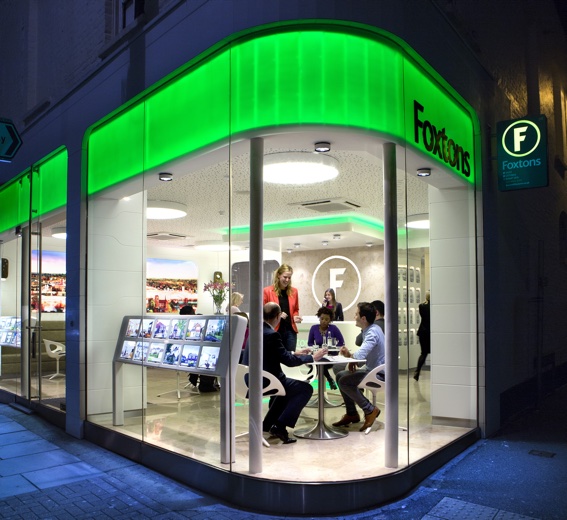
Yet, yesterday’s confirmation that Foxtons are sniffing around Douglas and Gordon as a potential purchase is none of these things. To me it makes little sense except to provide some temporary excitement for management and as a means of distracting Foxtons’ shareholders from losing patience with the troubled ‘London Agent’.
Foxtons and Douglas and Gordon both have issues. Both make no money and both have seen decreasing revenues for years. The senior partner in this propose deal, Foxtons, has overseen a loss of £26m in the last 24 months compared to profits in prior years that were substantial. Revenue has declined every year since 2015, down 29%, and its glossy results reports are, in a ‘Yeah but, no but…’ kind of way, perpetually littered with ‘Brexit’ and ‘Covid’ excuses whilst competitors such as Chestertons and Dexters have prospered in the exact same market.
D&G are 6 times smaller than its rival at £16m in annual takings and which are declining. Profit is negligible and, notwithstanding the remuneration being paid to management, a £21,000 surplus last year is getting no-one else very rich.
One of the millstones around the neck of each firm is their branch network cost, Foxtons with fifty somewhat faded offices now and D&G with eighteen. Foxtons’ accounts indicate premises liabilities of £59m over the term of their leases with £7m paid out annually in rent – £150,000 per branch per year.

And combining the two companies’ real estate footprint just gets Foxtons back to where they were three years ago before they began quietly shuttering many of theirs. Doesn’t it seem rather foolish to spend millions of pounds of shareholder cash closing a load of branches to then stump up £15m (as is the rumoured price tag in this deal) simply to buy them back later?
Incidentally, if the £15m is true, that’s £833,000 per office – rather more than it would cost to open 18 new ones under the Foxtons brand again.
And what of £15m for a business that makes less than a junior neg’s basic salary in profit? A bewildering multiple of x714. The D&G shareholders seem to be doing unjustifiably ok out of this transaction. Why?
This is indeed an odd deal on a number of levels and don’t just take my word for it, when the news was confirmed to the City at 3.30pm yesterday (Monday) Foxtons’ share price plummeted by 15%, wiping a further £30m off the value of the company. It can barely afford more reductions in share value but as I predicted it would see this year. To think that in 2014 a share in Jon Hunt’s former glory was £4.00 whereas now it’s less than 60 pence.

It’s just my opinion of course but this acquisition looks like a sticking plaster for Foxtons’ woes designed to ‘look good’ when in fact it does nothing of the sort. Adding the weight of a similarly antiquated bricks and mortar business model to an outdated entity with its fiscal head under water and where neither have stood the test of modernity, is seemingly not something that the square mile relishes. Understandable if their only strategy in our changing world is ‘do more of the same still’.
I can’t see this ending well. But before we think that one size fits all where all mergers are concerned, this deal is not the same as a Hunters/TPFG or a Countrywide/Connells. In both of these outcomes there will be at least one sensible grown-up with a recent, decent track record running the show.
But when two pigs mate, it should be no surprise that the offspring produced is ….. another pig.
This article is the personal opinion of its author. Property Industry Eye has offered Foxtons and Douglas & Gordon an opportunity to respond.







Comments (17)
RQ seems to know a lot about a lot and seems to get many things right.
Is that you Russell?
Does anyone know why RQ has such a problem with Foxtons? His commentary on the company always seems disproportionate and irrational. Sour grapes?
Life On Mars-You miss my point completely. I am not referring to on line v High street offices. Do you watch the news/read the newspapers? I am referring to the woes of the High Street in general In my town alone we have lost our only M and S, our Debenhams and most of the shops will not open again in their current guise. It costs to park and the LA needs that income and car parking in most towns inconvenient .As we know LA will eventually realise but it takes years ! And its a town less than an hour by train to the city and an epi centre of Logistics growth. If you really dont think the High street is going to change you are in cloud cuckoo land life on mars-or are you indeed living on Mars? Estate Agency as a business will be fine of course and I am personally a big fan of teams working together in an office environment but I also see some mileage in some locations for a different way of doing things. But time will tell and if there are not huge EA office closures over the next few years in your world I will eat my shoe . Keep on file.
Talk of clashing cultures is somewhat misplaced here.
The D&G of today under James Evans, the one time Foxtons supremo of 14 years who ended up as divisional director, is a world away from the D&G of Ivor Dickinson.
There are so many ex Foxtons staff now employed within D&G it’ll be like a family reunion rather than predatory take over.
Good luck to ’em I say.
Foxtons expanding makes it harder to be swallowed by another predator
or maybe Foxtons acquistion is being undertaken with the blessing of a predator .I should imagine Foxtons are involved in a number of conversations
Whilst successful, Foxtons clearly suffer with their reputation somewhat, so I can’t help but compare this with the takeover of Virgin Money by CYBG (Clydesdale / Yorkshire Banks). CYBG have bought Virgin Money, and are dropping their old historic brands in favour of the Virgin Money brand, when clearly you’d think they’d do it the other way around.
However, CYBG, under their old ownership, ruined thousands of property businesses by withdrawing term loans early. There’s a massive court case about to happen which will most likely drag CYBG’s reputation through the gutter once their antics are revealed. So what better way to distance yourself from the looming bad press than by buying out another company, and assuming their identity?
It’s impossible not to admire Foxtons for the aggressive way the business was built up, but you do wonder if its poor reputation amongst Londoners is part of what has driven them to make this acquisition? Don’t be surprised if you see some of its poorest performing (or perceived) offices being moved over to the D&G brand in the next few months.
You forgot to mention the merger of eMoov & Tepilo in your case study
Funny RQ should mention a pig in a poke because that describes that deal perfectly
Undoubtedly a few clashes will occur as they will in Connells/CWD-you would hope that this basic element of the deal will have had a lot of thought and will be priced in. I agree its probably all about the lettings book.
Romans Leaders you say is a good coming together-sorry RQ but what are the financial results like? Romans a shadow of its former self IMO.
The Connells/CWD deal will only be a good deal if they immediately consolidate the branch network in all of Connells/Sequence and CWD -again all factored in and the plan held in File XYZ at Leighton Buzzard ready to be deployed. All those leases on a dying High Street
Interesting times.
A dying high street? Erm … let’s think about that one: On-line only agents’ market share has been declining for a few years and continues to do so; those going down the Hub route and the nonsense of ‘work from your bedroom’ are falling flat on their face, so who exactly is picking up all of the business then if the High Street really is dying? The reality of course is that those High Street agents that know what they’re doing have never had it so good! Pipelines are bursting at their seams and profit forecasts are eye wateringly good! The smart operators are keeping their heads down and enjoying getting on with doing what they do well, while others mess around with their Hubs and ‘work from your bedroom’ fads. A recent independent poll revealed what we already know ….. that over 9 out of 10 vendors place a high level of importance upon their agent having a local high street presence. The last time I checked it was the vendors who pay our bills, so listening to what they want, rather than what we want, might just be a decent idea? The high street is far from dead MajorTom, unless of course you’ve got a load of branches with no staff in them? In which case, might be an idea to be more focussed on File XYZ in Colchester, rather than Leighton Buzzard?
You miss my point completely. I am not referring to on line v High street offices. Do you watch the news/read the newspapers? I am referring to the woes of the High Street in general
In my town alone we have lost our only M and S, our Debenhams and most of the shops will not open again in their current guise. It costs to park and the LA needs that income and car parking in most towns inconvenient .As we know LA will eventually realise but it takes years ! And its a town less than an hour by train to the city and an epi centre of Logistics growth. If you really dont think the High street is going to change you are in cloud cuckoo land life on mars-or are you indeed living on Mars?
Estate Agency as a business will be fine of course and I am personally a big fan of teams working together in an office environment but I also see some mileage in some locations for a different way of doing things. But time will tell and if there are not huge EA office closures over the next few years in your world I will eat my shoe .
Keep on file.
Don’t know about anyone else but the wrong end of the stickness and the disrespect of the subject firms puts me in mind of Dick Emery’s ‘bovver boy’ …… Daaaad! I fink I got it wrong again!
Don’t think its odd at all to see where there’s value and opportunities in here.
There’s a number of reasons why on the face why the deal still looks competitive. First of all they could open those offices but time is a resource too and you’d have to imagine it’d take years to build what they could attain overnight.
Secondly the lettings book looks great and could be built on.
We all know that there’s gold in data, and with getting on for almost 3 decades worth of prime central London past buyers and sellers and landlords there’s a veritable goldmine to go after if Chiswick Park’s fabled client services department got to work.
Then there are the savings, famous often infamous when doing any deals but as a Limoncello Liberal I’m not talking about mass redundancies but there are obvious savings. Both Foxtons and D&G have sizeable investments in their proprietary CRM systems, Foxton’s famous Boss system you would imagine would be a natural saving straight on the bottom line. That’s the most headline but there’ll be plenty like that.
We can look and deals and think where’s the merit in that until it becomes obvious, Elon Musk has made more in Bitcoin that Tesla has in profits but thats not stopped both becoming the most richest around.
Lastly and maybe it should have been at the top you often do deals to get the right people. There must be a wealth of talent in that business and I can only really comment on their CEO James Evans, but I’ve spoken to a lot of agents many of them with fantastic businesses and they couldn’t speak highly enough of him, I can’t claim to know him very well but did spend a week in his time and I was blown away by his thinking. Quiet and understated, words that I know are alien to you and I Russell but most would agree thats not a bad thing !
So yes I could’t really have been more impressed and I’m sure there’s many that know him far better but if I’m right then what value talent like that.
As ever its not just about the headline figures.
D & G has a cracking portfolio and that is what Foxtons wants – it has been clear it wants to buy letting books.
It is a sad day as D&G has/had flair and a strong identity.
Will the cultures clash? Perhaps. It’s about the quality of the property and client management.
Well, let’s introduce a few facts into the story .
Foxtons are expected to turn a profit for pandemic year of between £1./ £1.5m .having made annual losses for the previous 2 years like many others with the Central London market on its knees but for the years prior to that enjoyed decent profits .
Gross profit before tax was reported as £41. 5m in 2015, £18.81m in 2016 and £ 6.59m in 2017
The BODS prudentlly raised capital of £22m in April last year with a blink of the eye without having to resort to” lenders of last resort “platforms like Crowdcube
Not only that not having dissipated the monies raised just to keep the lights on for a few months like certain parties performed better than expectations and have now returned monies back to shareholders by buying shares back in.
Monies leftover for potential acquisitions .
Shareholders have enjoyed a 100% increase in the share price since the beginning of April 2020 some of which fuelled by the rumour that Foxtons were being sold. to a predator
A retrace yesterday when it was announced they were actually turning predator themselves but still higher than 2 years ago and well above 33p last April
One accusation which can’t be levied at Foxtons is that most of their network expansion has been incremental, branch by branch They haven’ been gobbling up businesses with borrowed monies like Countrywide
Jury certainly out on the potential acquisition of D&G but who knows where the sales market is heading
Let’s wait and see the bones of the deal before commenting . Maybe the purchase price will be made mostly with paper and keep the D&G fee earners fully aligned and mean and keen
Maybe a final Payout conditional upon D&G’s performance for the next few years
Maybe also the deal is being financed by a new private equity a partner poised to make a strike on Foxtons
Interesting times ahead