
What a damning indictment of Labour that Andy Burnham appears to be strolling towards the leadership in what looks less like a contest and more a coronation. When your greatest obstacle is finding 81 MPs prepared to nominate an alternative, democracy starts resembling a royal succession.
It seems neither Yvette Cooper, Darren Jones nor even Wes Streeting can muster the numbers. That leaves Mr. Burnham largely unchallenged and, more importantly, largely untested, and scrutinised.
If he is to be Labour’s great ‘change candidate’, one obvious question remains: change from what? If the answer is merely Sir Keir Starmer with a northern accent and better eyebrows, voters may struggle to spot the difference.
Starmer’s farewell performance on the steps of Number Ten was an exercise in self-congratulatory hubris. As Kemi Badenoch so eloquently put it in a recent PMQ’s: “If you’re so brilliant, why are you leaving?” One glance at the opinion polls supplies the answer.
So let us examine Mr. Burnham’s greatest hits.
Council Tax Reform
Council Tax, based on 1991 valuations, plainly needs reform. New bands? Sensible.
But replacing it with an annual property tax simply shifts the burden onto homeowners while renters enjoy the same local services without contributing directly. Margaret Thatcher’s original principle was simple: everyone should pay something.
A nationwide revaluation would also unleash a tidal wave of contested appeals, keeping tribunals and advocates occupied until the next ice age.
Given that historically Council Tax was paid to the councils, I’m not sure how Mr. Burnham is going to get his thieving hands on the money for the Treasury, but no doubt this will be yet another surprise for us to unpack in the next few months.
Stamp Duty Reform
Almost everyone now agrees that Stamp Duty is economically damaging. It freezes the housing market, traps capital which would otherwise find its way into the Economy boosting growth and tax receipts and discourages mobility.
The problem? It raises £9-11 billion annually.
Replacing that revenue without inventing another tax dressed in socialist clothing, will require considerably more ingenuity than Labour’s usual class-war playbook.
Again, let’s see what fiendishly clever tricks Mr. Burnham has up his sleeve.
Land Value or Mansion Tax
Whether Mr. Burnham wants both an annual property tax and a Mansion Tax, or simply one disguised as the other, remains gloriously opaque.
A modest levy has a habit of becoming an immodest one by a few cranks of the Chancellor’s lever. Give them enough fiscal pressure and today’s 0.5% becomes tomorrow’s 2% and so on.
The casualties will be London’s housing market, internationally mobile wealth and the asset-rich but cash-poor widow, whose heirs may eventually face accumulated Mansion Tax alongside 40% Inheritance Tax. Compassion rarely survives Treasury arithmetic.
The Biggest Council House Building Programme Since the War
Every incoming Labour leader discovers the mythical housing tap that previous governments somehow forgot to turn on.
Yes, build on more public land. Yes, speed up planning.
But then reality intrudes, soaring construction costs, chronic labour shortages, local opposition and councilor’s who suddenly become enthusiastic conservationists whenever local elections approach, whilst Nimbyism gains supremacy.
It all sounds suspiciously like the promises made before the 2024 election and we will soon see what will happen to this ‘Disneyesque’ aspiration.
As Shakespeare’s King Lear (Act 2, scene 4) put it: “I will do such things – what they are yet I know not, but they shall be the terrors of the earth!”
Margaret Thatcher’s governments built around 300,000 homes a year at the time and half of this number would qualify as miraculous result today.
Rent Controls
Rent caps are one of those policies that sound compassionate until economics joins the conversation.
Ask the New York Mayor, Mr. Mamdani, about empty rhetoric on this subject.
Artificially suppress rents whilst simultaneously demanding landlords spend more on improvements, and many simply stop investing, or stop letting altogether and the empty buildings in New York lay testament to this very point.
Whenever the ‘dead hand of government’ grips a free market, shortages usually follow.
Equalising Capital Gains Tax with Income Tax
Capital Gains Tax has one awkward characteristic.
It is optional.
Raise it too far and people simply don’t sell. Capital stays locked in assets, investment slows, and Treasury forecasts become works of historical fiction.
The tax may satisfy Labour’s instinct for redistributing wealth, but it is a surprisingly poor way of raising it, made worse by the fact that there is an eighteen-month lag after the asset is sold, when the tax is due. The Treasury needs money now, not in eighteen months.
Post Liz Truss carnage
Mr. Burnham will soon discover that fiscal rules are rather less forgiving than campaign speeches. Defence spending alone demands tens of billions of pounds. The promises made to Labour members must somehow coexist with the commitments to the bond markets and if you go rogue on the latter, you will end up with the same post Liz Truss carnage that she suffered.
Tax. Spend. Borrow. Those remain Labour’s natural instincts, but financial reality has an irritating habit of vetoing ideological enthusiasm.
His honeymoon, if there is one, may prove shorter than England’s next World Cup penalty shoot-out.
Orwell’s Animal Farm
Like Gordon Brown before him, Mr. Burnham seems unlikely to gamble on an early election. Meanwhile, Nigel Farage’s latest freebie controversy might be solved by a masterclass lesson from Starmer, Reeves and Rayner on accepting ‘hospitality’ from a political well-wisher (Lord Alli) whilst still keeping within the rules.
Overtures of George Orwell’s Animal Farm spring to mind.
When the dust settles, the real question remains unanswered.
Is Andy Burnham genuinely offering a new direction, or merely a cigarette-paper improvement on the Starmer model?
The answer may determine whether Britain is facing genuine political change or simply another three years of the same tune, played in a different key.
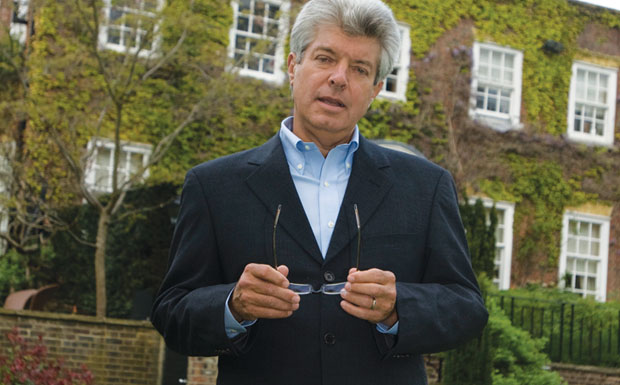
Trevor Abrahmsohn is founder and director of Glentree International in north London.







Comments (6)
Trevor warns Burnham he’ll face “the same post Liz Truss carnage that she suffered” if he goes rogue on fiscal commitments. Fair warning. But he skips what actually caused that carnage.
Truss wasn’t the disease. She was the patsy left holding the parcel when eight years of artificially low interest rates ran out of road. Her mini-budget lit the fuse, but the gilts crisis that followed meant whoever won in 2024 was rebuilding fiscal credibility from zero, two years before Starmer took office. That was visible in the bond markets in real time, not hindsight.
Taking away low interest rate, asset inflation feel-good economics is like taking Razzle from a teenage boy. It didn’t hurt, it gave so much pleasure. That’s exactly why withdrawal gets blamed on whoever’s holding it when the music stops, not on the years of habit that made the pleasure unsustainable in the first place.
So when Trevor quotes Kemi Badenough’s “if you’re so brilliant, why are you leaving?”, it’s applause bait, not analysis. It’s an engineered line, workshopped for the clip, and it doesn’t stand a chance against the record. Badenough’s own party spent eight years building the fuse that Truss lit. Attacking Starmer’s exit as proof he “wasn’t brilliant” only works if you ignore who handed him the wreckage.
Judge Starmer on what he delivered. Trevor’s critiques of the property tax, rent controls and CGT changes still stand on their own merits. That’s the argument worth having.
Bravo Property industry eye, for doing a totally unbiased opinion piece from a man who really has his hands on the pulse of the everyday estate agent.
Abrahmsohn isn’t just an estate agent; he is the undisputed “King of Billionaires’ Row,” the man who brokered the sales of the ultra-prime mansions on The Bishops Avenue in Hampstead for over forty years. A friend of the Oligarchs. Wonder why he’s a little bit worried about Mr Burnham ?
Quick question, how much did he pay you to write this article / propaganda for billionaires?
Wonder if this comment will stay on the page?
Billionaire or not. He’s correct.
Debated in the style of a Reform supporter…….
Says the person that nobody has loved.
SNP actually