
Could political uncertainty at the top of government have implications for the housing market?
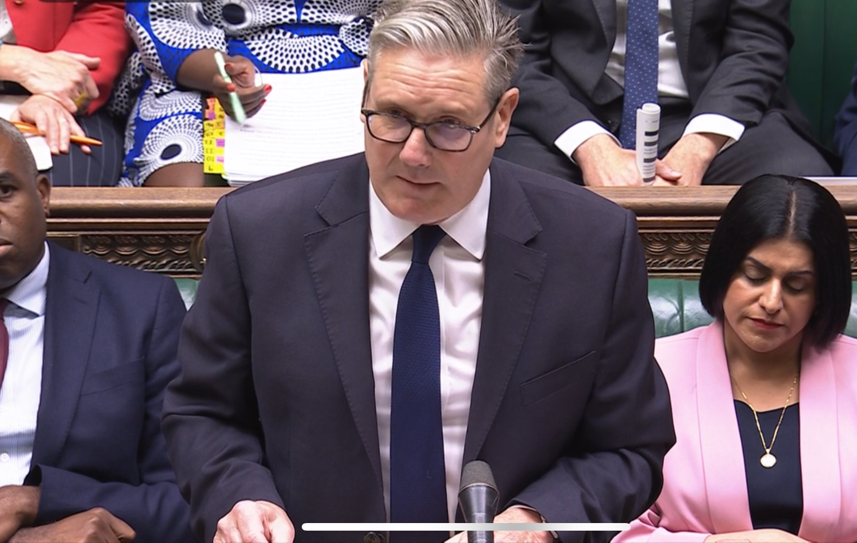
That question has been thrust into the spotlight after US President Donald Trump yesterday claimed that Sir Keir Starmer would resign as prime minister as soon as today, a social media statement that immediately fuelled speculation about Labour’s future leadership and the direction of government policy.
While there is no confirmation that Starmer intends to step down, the comments have reignited debate about what a change in leadership could mean for the economy, taxation and the housing market.
For property professionals, the bigger question may be whether a successor would pursue a different approach to housing policy.
According to Tom Bill, head of UK residential research at Knight Frank, a future Labour leadership contest could revive discussion around shifting the tax burden from property transactions to property ownership – a move that would have significant implications for homeowners, investors and the wider housing market, especially if Andy Burnham, the odds-on favourite to become the next leader of the Labour party, becomes prime minister.
“It won’t be a top priority but a move to tax the asset rather than the transaction appears to be on Burnham’s radar,” said Bill. “He supports a proposal by campaign group Fairer Share, which wants to replace stamp duty and council tax with a levy equivalent to 0.48% of a property’s value.
He continued: “The simplicity of the proposal is commendable and scrapping stamp duty make sense given how it hinders social and economic mobility, but the proposal in question feels too overtly political. Shouldn’t the sole aim be to maximise tax revenue?
“Under the plan, landlords, developers, overseas buyers and second-home owners would pay more.
“A similar approach with stamp duty since 2014 has curbed activity in exactly the sort of high-value locations where most revenue is presumably being targeted. A regular flow of tax receipts has obvious benefits for the chancellor, but politicizing the housing market feels like an approach that’s been tried and failed.
At a time when many landlords are struggling to make things stack up financially, any further disincentive is likely to result in less stock and higher rents. And the notion that developers would rather “landbank” than build houses for a profit is a misguided assumption, according to Bill.
He added: “If any new plan is too financially redistributive, it would also distort decision-making. Annual revaluations would turn house price growth into a tax liability and there is a psychological difference between a one-off stamp duty bill and a recurring charge, particularly in London and the south-east where payments would be a proportionately larger share of household income.”





Comments (1)
Worth grounding this in who’d actually be exposed. I run GalimAI, where we map UK property ownership at company level. Looking at active freehold-owning companies in England and Wales, 179,695 of them – about 43.5% – have held their property since before April 2016, so they’re sitting on a decade-plus of unrealised price growth. That’s the cohort any change to CGT or gains treatment would bite hardest, and it overlaps heavily with owners nearing retirement or exit decisions. The politics matter less than the structural fact: a large, ageing slice of the market is holding big paper gains they haven’t crystallised. Change the tax on that and you shift a lot of sell-versus-hold maths at once. – Dror, GalimAI