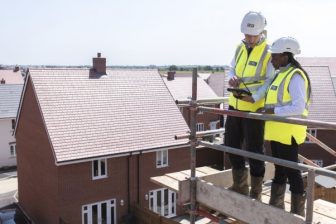
 Persimmon increased home completions by 13% in the first half of 2026 despite warning that affordability constraints and cost pressures continue to weigh on the housing market.
The housebuilder completed 5,189 homes during the period and now expects to deliver around 12,500 for the full year, at the top end of its previous guidance.
Group revenue rose 15% to £1.73bn, while pre-tax profit increased by the same percentage to £168m. Underlying operating profit was 10% higher.
The average selling price of Persimmon homes increased 1% to £285,752.
Net private sales were up 6% in the five weeks to the end of June, although the company said open market sales had softened slightly in recent weeks amid challenging wider market conditions.
Persimmon, which also operates the Charles Church brand, said it had also increased its market share during the first half.
Chief executive Dean Finch said: “Market conditions remain challenging, with affordability constraints and build cost pressures affecting the sector.
“We have responded quickly, taking clear management action focusing on driving operational efficiencies throughout the business. Our disciplined land buying, industry-leading cost efficiency and vertically integrated operating platform give us important structural advantages as we seek to mitigate cost pressures and support growth.”
Finch said the company remained on track to deliver growth in 2026 in line with market expectations.
He added: “Having significantly invested in our strategy over recent years, our focus is increasingly on converting those investments into improving returns.”
Anthony Codling, managing director for UK housebuilding at RBC Capital Markets, described the interim figures as a “solid set of results”, highlighting the growth in completions and underlying operating profit.
He said: “Revenue of £1.73bn came in 9% above VA consensus and underlying EBIT of £189.1m was 7% ahead, driven by stronger-than-expected volumes and operational leverage.”
He added: “The principal concern is the 30bps operating margin decline to 12.8%, partly mix-driven, and the quantification of £40-50m of inflationary headwind over the next 18 months that management cautions may not be fully offset in 2027, but it is working hard to mitigate these cost headwinds.”