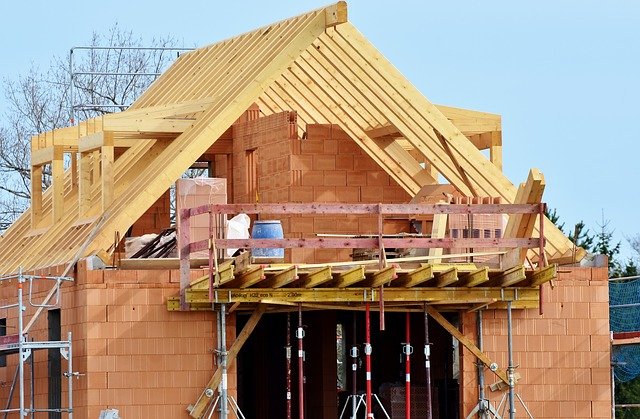
 The downturn in UK housebuilding eased in July, although residential construction remained in contraction, according to the latest S&P Global construction survey.
The housebuilding index within the S&P Global UK Construction Purchasing Managers’ Index (PMI) rose to 41.8 from 35.9 in June, following nine consecutive months below the 40 mark. The July reading represented the slowest decline in housebuilding since October 2025.
The wider construction PMI also improved, rising to 44.7 from 38.4 in June. A reading below 50 indicates a contraction in activity, while one above 50 signals growth.
S&P Global said the figures indicated that the construction sector had begun to stabilise following a sharp downturn during the second quarter.
There were also signs of improvement in demand, with the index measuring new orders reaching its highest level since September 2025, although it continued to indicate falling workloads.
Employment declined for the 19th consecutive month, but at the slowest rate since February, while business expectations improved to their strongest level since that month.
Despite the improvement in housebuilding, industry commentators warned that significant obstacles to a recovery remain.
Joe Sullivan, partner at MHA, said: “Housing remains under pressure, hit by affordability constraints, planning delays and fragile buyer confidence.”
Richard Pike, sales and marketing director at Phoebus Software, also pointed to affordability and confidence as constraints on residential development.
He said: “There are some positive signs in the latest UK construction PMI that the downturn is starting to stabilise with output at its highest levels for four months. However, the sector remains in contraction, with housebuilding continuing to underperform the wider construction sector.
“Unfortunately, deep structural issues in the property market remain. Affordability pressures and economic uncertainty mean many prospective buyers are delaying moves. Developers, in turn, are reluctant to bring forward new sites when demand remains uncertain.”
Pike added: “Until confidence returns across the housing market, construction activity is likely to remain subdued, and any recovery is likely to be very slow and gradual.”
Kelly Boorman, national head of construction at RSM UK, said greater clarity was needed over housing funding and the barriers facing development.
She said: “Housebuilders need clarity around how funding for housing will be deployed, and how current barriers around planning, design and procurement can be overcome. Funding is of course welcome, but this alone won’t necessarily resolve some of the challenges the construction sector currently faces.”
Maria Harris, chair of the Open Property Data Association, argued that improving the speed and certainty of property transactions could also support housing supply.
She said: “Too many transactions still take months to complete, with buyers and sellers facing uncertainty at every stage. That not only creates stress and increases the risk of sales falling through, it also reduces confidence across the entire housing market.
“Developers are less willing to build if transactions are slow and unpredictable, while buyers become more cautious if they fear delays or unexpected costs.”