
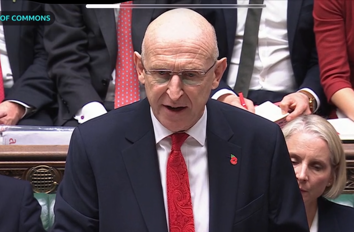
Chancellor John Healey has delivered an Autumn Statement that offers little to revive the wider housing market, while hitting landlords with higher taxes and raising concerns over mortgage costs.
The chancellor announced a two-percentage-point increase in tax on rental income, prompting warnings of a further exodus of private landlords and renewed pressure on rents.
First-time buyers received some support, with confirmation of the new Your First Home scheme and plans for a dedicated First Time Buyer ISA to replace the Lifetime ISA.
On housing supply, Healey announced an additional £1.5bn for the social and affordable housing programme. Land sold to social housing providers will also be VAT-free.
A further £430m has been pledged to help rough sleepers move off the streets.
However, there were no major changes to building regulations or wider measures to stimulate housing transactions.
Banks also face an additional 3% tax surcharge, raising concerns that lenders could pass on higher costs to mortgage borrowers.
Elsewhere, Healey announced a £100 winter energy payment for 20 million households in Council Tax bands A to D, business rates relief for smaller firms and an extension of the 5p fuel duty cut.
Adding to the uncertainty, the Office for Budget Responsibility cut its growth forecast for next year to just 1%.
While the additional funding for affordable housing and homelessness will be welcomed by parts of the sector, questions remain over the impact of higher taxes on landlords, housing supply and market confidence.
Industry reaction:
Heather Powell, partner at Blick Rothenberg, warned that the increase in tax on rental income could accelerate the departure of private landlords from the market.
She said: “+2% on rental income really is the final nail in the coffin for private investors in rental properties – tax rates of 24%, 44% and 49% – and a deduction for interest that is restricted to the basic rate will mean that landlords will be looking to sell up and invest their money elsewhere.
“Tenants looking for good homes to rent will find reduced supply, and thus higher rents due to competition, and will be driven into the arms of corporate build-to-rent investors.”
Greg Tsuman, MD for Lettings, Martyn Gerrard: “Adding a further two per cent tax to property income on top of the previously announced two per cent is a surprising and incomprehensible decision. Last year’s Autumn Budget dealt a severe blow to the sector, but it looks like the Government wants to finish it off.
“The OBR was already warning that the level of tax being imposed on landlords was likely to drive up rents and reduce rental property supply. This is lunacy and I fear that the Government is actively trying to dismantle the PRS. At this point, the government may as well criminalise renting out a property.
“Landlords have endured successive measures against them for years and we’re already seeing an unprecedented exodus from the rental market. There was a desperate need to reassure and provide confidence. Instead, we’ll see the rush to the door intensifying. The property market is already struggling with the oversupply of rental properties being sold and we’re going to see even more downwards pressure on house prices as a result of this.
“With most renters not in a position to buy in this economic climate, we’ll just see more empty homes and increased rents. As the Government tries to end homelessness, it couldn’t have picked a better way to cause it to surge. If the previous Budget shot themselves in the foot, this one could be to the head.”
Richard Donnell, executive director at Zoopla: “Today’s Budget has delivered a welcome boost for first-time buyers and the home-building industry. Localised price caps set at what first-time buyers want to pay for new homes means the Your First Home scheme will have around half the impact of the old Help to Buy scheme.
“If local price caps are set at what first-time buyers want to pay for new homes, Zoopla estimates that over a third of new homes will be eligible for the Your First Home scheme with up to 30,000, or one in ten, first-time buyers set to benefit each year. This will cost the government around £1.5bn a year so looks set to run for 3 years based on the £4.7bn announced in the Budget. The income caps announced in the Budget are high enough to ensure all these homes are affordable with a 2.5% deposit assuming a 4.5x loan to income mortgage.
“When the scheme was announced before the party conferences Zoopla saw an immediate 40% jump in searches for new homes at the prospect of support with an equity loan to buy new homes. The appetite for the scheme is there, but its success will depend on getting the price caps right to ensure enough homes qualify to make a meaningful difference.”
Mark Eastwood, director of corporate sales at Together, warned that the additional tax on banks could eventually affect mortgage borrowers.
He said: “Having declared the banking sector the ‘jewel in the crown’ of the country’s economy, the Chancellor’s decision today to increase the rate profit surcharge for banks undoubtedly removes some of the sheen.
“The Treasury would have judged today’s decision as necessary given the diminishing fiscal headroom and a desire to keep personal tax changes to a minimum, but given the centrality of the sector to the economy, the effects of the tax are likely to trickle down to everyday British people.
“Beyond a potential acceleration of plans to lay off workers or move certain operations out of the country, banks may look to offset the effects of the tax by lowering interest rate deals for savers and increasing mortgage rates.
“Mortgage borrowers are already contending with a market grappling with a cauldron of unpredictable swap rates and rising inflation, so an additional upward pressure may cause first-time buyers to pause plans, and existing borrowers to cut back on additional spending to cope with increased rates.”
Matt Hutchinson, director of SpareRoom: “By pruning the cost of living here and there, the chancellor has put some money back in people’s pockets, but the biggest outgoing of all – housing – continues to spiral, making financial stability, let alone saving, extremely challenging.
“Room rents are now at an all-time high in seven of the UK’s nine regions and, with supply in negative growth, that’s not going to get better any time soon.
“Helping people onto the property ladder is a lifeline for some first-time buyers, but does nothing to improve affordability and, in truth, simply does more to prop up high house prices. Helping a select few won’t make housing genuinely affordable for the majority, which has to be the end goal. That means finding creative ways to boost supply beyond building.
“Unfortunately, one obvious opportunity to boost supply – increasing Rent a Room scheme tax relief in line with current rents – was missed again today. A significant number of lodger landlords are retirees who offer rooms at below-market prices, so this could have delivered more than just ‘breathing space’ to both pensioners and renters.”
Sarah Bush, head of residential at Cheffins: “The Your First Home scheme is simply a moderate rebound from the Conservative’s Help to Buy Scheme. Currently, it’s not clear who the biggest winners will be out of this scheme – first time buyers or developers. As the scheme is only applicable to new homes, the Your First Home scheme will not light up the rest of the stagnating property market. Should it have applied to second hand homes too, it might have helped to kickstart chains throughout other brackets, however, I forecast that all this will do is help developers get more new home sales over the line. In addition, for the scheme to actually help people onto the property ladder, we need the availability of new homes at affordable levels, which are in short supply throughout much of the country. Without the homes, or the land to build them, or the planning reforms to allow these developments to be built, this looks to just be a vote winning move from the Chancellor. The announcement to support the build of council housing only goes so far, we need relaxation of measures for private new build developments for this scheme to make a true impact.
“While the deposit levels required as part of the scheme are lower than those on Help to Buy, it leaves behind a larger mortgage. As the housing market remains unpredictable, how can buyers using the scheme ensure that they will be able to pay back the loan? It is crucial to remember that the equity contribution is a loan, it is not a gift. In the days of steady house price growth, buyers could have taken confidence that they would be able to pay off the government loan incrementally or at the end of the five year term, thanks to the growth in their property’s value. However, taking into account current global economics, there is no guarantee that these new homes will go up in value, potentially leaving those who have used the Your First Home scheme needing to either remortgage or find the cash to pay the government back.”
Lizzie Hillman – Co-owner of Decoroom: “Today’s Budget will come as a huge relief to much of the property industry. Fears of a lower mansion tax threshold and an increase in Capital Gains Tax had weighed heavily on sentiment, despite reports suggesting neither would happen, with potential consequences for budgets across the market including various trades such as builders, interior designers and home stagers. In prime London’s buyers’ market, sellers are already competing hard for attention, with longer selling times and widespread price reductions. Empty rooms, tired interiors and dated furnishings can make it even harder for buyers to see a property’s potential or justify its asking price. Further tax costs could have squeezed the budgets available to prepare homes for sale and improve them visually, while encouraging developers to cut back on furnishing show homes.
“For home stagers, the relief is twofold. Greater confidence could help stalled projects move forward, while fewer additional financial pressures give sellers and developers more room to invest in presentation. That could translate into more staging commissions and fewer furnishing budgets being cut. This is precisely the market in which that investment matters most for properties that need it. A relatively modest investment in presentation can cost considerably less than the first asking-price reduction.”
Claire Whisker – Founder of First In The Door: “It’s a relief that the Budget has passed without any major property tax changes that would put further pressure on the market. Activity has slowed in recent weeks, as it often does in the lead-up to a Budget, with buyers and sellers holding off on decisions until they know what lies ahead. This autumn, however, has felt particularly challenging, with a slow start to the season and confidence already fragile. Keeping the mansion tax threshold at £2 million will be especially welcome for buyers who feared their next home could be brought into its scope. It gives them greater certainty when assessing their budgets and deciding where to buy. For those purchasing above the threshold, however, the ongoing cost will still need to be factored in alongside stamp duty, mortgage payments and maintenance, and it will continue to influence what some buyers are prepared to offer.
“Not reducing stamp duty, however, is a missed opportunity to make moving more affordable. Buyers will continue to deduct a substantial tax bill from the overall funds they have available, which directly affects what they can offer for a home. For families needing more space and older owners considering downsizing, the cost can be enough to postpone a move altogether, limiting choice elsewhere in the market. Buyers who do proceed need to establish their total acquisition budget before viewing, so that the purchase price leaves sufficient room for tax, essential work and a sensible financial buffer.”
“Additional support for first-time buyers is welcome news indeed, particularly where it tackles the difficulty of saving a deposit while paying rent. Helping someone make a sustainable first purchase can also unlock a chain of moves further up the market. The test is whether this improves affordability in practice. Measures that increase buyers’ spending power without increasing the supply of suitable homes risk being absorbed into higher prices. First-time buyers need support that leaves them with manageable monthly payments and some financial breathing room after completion.
“I hope this will provide the encouragement buyers and sellers need to make decisions and bring some much-needed momentum back to the market.”
Tom Brown, MD, Real Estate at Ingenious: “Your First Home” scheme and the potential support it could provide to first-time buyers at a time when access to homeownership remains a significant challenge for many across the UK. With the cost of delivering new homes remaining stubbornly high, measures that help new buyers take their first step onto the property ladder have the potential to make a meaningful difference across the market.
“We look forward to unpacking the package of support as more detail emerges and understanding how the scheme will work alongside the wider measures needed to increase supply and support a healthy, sustainable housing market.”
Lazer Levy – founder of LJ Interiors: “It’s a relief that the Chancellor has not lowered the mansion tax threshold or increased Capital Gains Tax, giving sellers some much-needed certainty. The impact of property tax changes reaches far beyond the buying and selling of homes. When people delay a move or become concerned about additional costs, it can affect how much they feel able to spend on preparing or improving a property for sale. That has a knock-on effect on all sorts of businesses and trades, from home stagers and interior designers to decorators, builders and other professionals.
“The uncertainty in the lead-up to The Budget has held many sellers and developers back, and we’ve experienced our slowest October since Covid. Now that people have a clearer picture of what lies ahead, I hope we’ll see confidence return and more decisions being made. The reassurance of today comes at an important time for the property market.
“Homes are taking longer to sell, price reductions are increasingly common and buyers have more choice and negotiating power. In a buyers’ market, presenting a property at its best is more important than ever. Buyers can afford to be selective, so an empty home, a tired-looking property or one with decor that won’t appeal to everyone can struggle to stand out.
“My hope is that the certainty following the Budget will now encourage more sellers and developers to feel confident investing in how their properties and show homes are presented. That would be positive for the wider network of businesses and trades that depend on an active property market.
Becky Fatemi, executive partner at UK Sotheby’s International Realty: “Nothing particularly damaging was announced today other than the tax rise of 2% on income from property, but there was nothing to get excited about either. This Government has spent years taking swings at international wealth and then acts surprised when it leaves. We should be encouraging these people to come here, invest, spend money and create jobs, not giving them every reason to go elsewhere. London is competing on a global stage, and wealth doesn’t have to stay here.
“I suspect the government would have gone much further today if it weren’t constrained by its 2024 manifesto. An early election next year wouldn’t surprise me, and I fear we haven’t seen the last of its ambitions to tax wealth. My clients aren’t losing sleep over today’s Budget. They’re already looking towards the next election. They plan ten or twenty years ahead. And right now, the uncertainty is doing us no favours.”
Will Watson, head of The Buying Solution: “The Prime property market has spent months playing ‘Budget Bingo’ – the real relief is now understanding the ‘rules of the game’. Whilst the property income tax rate has increased 2 per cent which is a kick in the teeth the property market will benefit from the clarity provided.
“No increase to Stamp Duty Land Tax and no further mention of additional Mansion taxes are both positives so too is the likely shelving of a snap general election. Whilst mortgage rates have risen due to inflation they may rise even further due to the conflict in the Middle East. Our advice therefore is to get ahead rather than watch from the wings, there are signals we’re at the bottom of the market right now – those willing to close a deal in the coming months could be in the most positive position going forward.”
Russell Smithers, CEO and co-founder of REDD: “I’m relieved we’ve avoided another round of major tax changes, as constant tinkering is deeply unsettling for investors. But stability alone isn’t enough. I would have liked to see more ambition from the Chancellor to encourage investment and growth.
“We cannot keep trying to solve the country’s problems through taxation, particularly when higher taxes risk driving wealth, businesses and investment elsewhere.
“Stamp duty is a prime example of where we’ve got the balance wrong. The Treasury can’t collect tax from transactions that never happen. That’s lost revenue, lost business and money that isn’t circulating through the economy.”







Comments (1)
Will finance costs now be deductible at 24% (basic property rate) or 20% (basic rate)?