
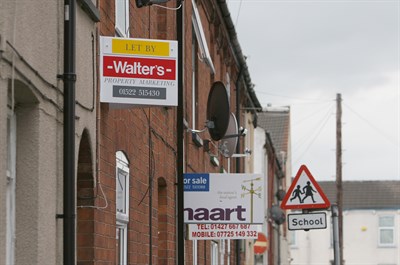
 Birmingham City Council has won a court challenge over its crackdown on letting agent boards in parts of the city following years of complaints from local residents.
The council introduced enforcement action in Selly Oak and Bournbrook, arguing that a growing number of ‘To Let’ boards had become a source of visual clutter and were often left in place long after properties had been let, effectively becoming fly boards rather than genuine property advertisements.
It said many of the signs were being used primarily for brand promotion rather than to advertise available accommodation, particularly in areas with high concentrations of privately rented student housing.
The local authority also said reducing the number of boards would help improve the appearance of neighbourhoods and contribute to safer streets.
The enforcement action was challenged in court but the appeal has now been dismissed, allowing the council’s restrictions to remain in place.
The issue has been particularly prominent in Selly Oak and Bournbrook, where large numbers of student rental properties have led to concerns over the volume of estate and letting agent boards displayed throughout the year.
A council spokesperson told BirminghamLive: “The Property Licensing team has taken enforcement action to address the proliferation of letting agent boards on roads following long-standing concerns raised by residents, community representatives and local stakeholders.
“For many years, residents have raised concerns about visual blight, the over-commercialisation of the area, the impact on community cohesion, and the perception that boards can identify student properties as potential targets for crime.
“Due to the proximity of the universities, the ward has a very high concentration of privately rented housing, providing essential short-term accommodation for students studying in the area.
“In this context, the widespread use of letting boards had become a visible and persistent feature of residential streets.
“Evidence indicated many boards remained in place year-after-year despite properties being fully-let, meaning they were being used less to advertise available accommodation, and more as a form of commercial branding.”
The council said it had issued ‘community protection warnings’ to the most prolific letting agents.
“Of those, 13 agents complied and removed their boards, while four remained non-compliant,” the council spokesperson added.






Comments (5)
There is one agent who makes our local high street look like it is all available to let or for sale, it blights the area & I think brings down the feel of the town. Funny enough the owner of the agency lives in another area & owns 3 houses in a row, two of which he converted to flats without planning. He has also had a to let board outside these houses for over 3 years constantly. Same local authority, they just don’t seem to care.
Does his name end in *han, by any chance?
Sorry no, but as they are extremely litigious I won’t mention who they are!
Sales boards next!
Ah, the classic battle of the “To Let” sign—where letting agents treat residential streets like their own personal LinkedIn feed, left on display indefinitely just to remind everyone they exist.
Great for Birmingham! Though it does sound suspiciously familiar. Nottingham City Council actually got Regulation 7 directional powers granted years ago specifically to ban these endless “To Let” boards in student hotspots like Lenton and Radford. It was heralded as a massive victory against visual pollution… right up until the council effectively hit us with a “Yeah, we have the law, but who has the time?”
Now, due to a lack of resources to actually monitor or enforce the ban, the rules are basically a ghost story: agents know the legislation exists, but without anyone policing it, it’s gone right back to being a total free-for-all.
So while Birmingham is busy celebrating their court win, someone might want to hand them a magnifying glass—because a law on paper without the staff to enforce it is just another piece of street clutter!