

There are very few taxes that unite people across every social class, Stamp Duty (SDLT) is one of them.
Whether you’re buying a two-bedroom flat or a £30 million mansion in Hampstead, the experience is remarkably similar: the Government reaches into your pocket and removes a substantial amount of money in exchange for absolutely nothing. You don’t get any service, nor benefit, just a receipt.
Since George Osborne’s infamous reforms in 2014, successive chancellors have treated the prime London housing market rather like a cash machine that never runs out. Every few years another tweak, another surcharge, another ‘fairness’ adjustment appears, invariably resulting in someone paying even more tax. Believe it or not, a non-UK resident today, purchasing an additional property can face an effective Stamp Duty rate of 19%. An eye watering level, which is one of the highest in the world.
I did say nineteen per cent, this isn’t a typo!
That means a buyer acquiring a £20 million super-mansion could wave goodbye to £3.8 million before they’ve even chosen where to put the family photographs and at £30 million, the bill rises to a staggering £5.7 million.
For that sort of money, you could acquire a Gulfstream share, a Mediterranean villa, a world-class art collection or a decent-sized island if you shop carefully.
Instead, you get the privilege of paying tax. Ouch!
The Treasury must absolutely adore prime London property owners. They are the only customers who willingly spend millions of pounds before receiving the product. And that’s before the real costs begin.
The average super-mansion is not a house. It is a medium sized hotel masquerading as a residence.
There are security systems to maintain, swimming pools to heat, lifts to service, air-conditioning systems to repair, cinema rooms to update and acres of landscaped gardens all requiring service contracts and constant attention, sometimes referred to as a ‘money pit’.
Running costs of £500,000 per annum are not uncommon in these properties and you would be lucky to get away with this paltry sum.
In the past, owners comforted themselves with the expectation of capital growth on their properties. The theory was simple: pay the tax, endure the maintenance costs, and eventually watch the property increase in value. Halcyon days indeed.
Unfortunately, whilst this has been the case in the past, today you could be possibly looking at depreciation in values which has a nasty habit of shrinking one’s wealth.
Expensive properties in London have spent years moving sideways and some are now retrenching in value.
Against that backdrop, one has to ask a rather awkward question; why buy at all?
If an international entrepreneur, hedge fund manager, sports star or business owner intends to remain in Britain for a specific time, renting rather than buying, often produces precisely the same lifestyle, without the fiscal self-harm.
The family lives in the same house, the children attend the same schools, the guests admire the same drawing room, and the view from the master bedroom remains constant.
The only difference is that the tenant keeps the £3 million to £6 million that would otherwise have disappeared into the Treasury’s black hole.
This effectively means, that for a wealthy person who wants to stay in London for say five years, can do so, care of the government, since the rent that would be paid for this period is the equivalent of the SDLT, with many more benefits besides.
This is not tax avoidance; it is plain common sense.
Instead of immobilising a fortune in a market facing political uncertainty, legislative risk and punitive taxation, the equivalent capital remains free to earn some healthy returns, tax free, elsewhere in the world.
And unlike residential property in Britain, overseas investments don’t wake up every Budget Day wondering what fresh surprises the chancellor has instore for them.
What’s more, any rental agreement has the protection of an AST (Assured Short hold Tenancy Agreement) and is thankfully, outside of that ridiculous ‘Renters Rights’ new legislation which only harms the vulnerable and has created a stampede of private Buy-to-Let landlords selling up and cashing in.
There is another advantage; most of the expensive maintenance headaches remain the landlord’s problem and not the tenants.
When the boiler explodes, the lift malfunctions or the swimming pool develops an expensive personality disorder, the owner’s managing agent usually receives the telephone call, the headache, and the bill.
The tenant simply enjoys the property, which is exactly how life should be when one is paying a seven-figure annual amount for rent.
No one understands this market better than Amit Soni, who heads Glentree Rentals.
Over recent years he has quietly become the dominant force in London’s ultra-prime rental sector, handling a remarkable proportion of the largest and most prestigious lettings across the North-West London corridor.
When the world’s wealthy need a mansion, the ‘Amit’s hotline telephone’ tends to ring.
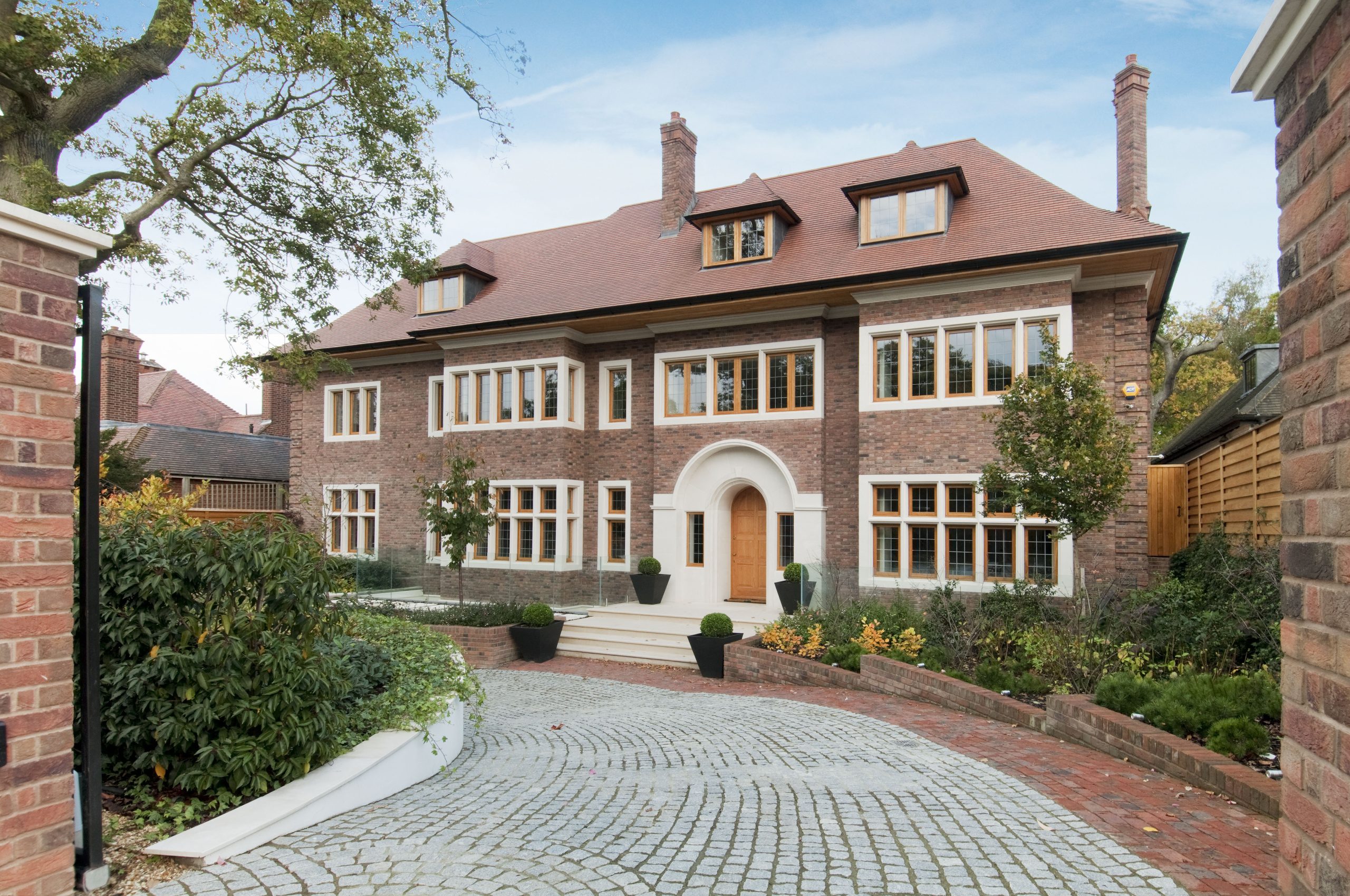
Recent transactions include the letting of Beaulieu in Courtenay Avenue, one of London’s great super-mansions.
Previous occupiers of this property have included Harry Kane and Tim Steiner, founder of Ocado.
Other cherished, notable clients who have dealt with Glentree Rentals include luminaries such as: Taylor Swift, Johnny Depp, Gal Gadot, Tom Cruise, Salma Hayek, and Gerard Butler.
The common denominator is not celebrity, it is the opportunity to find one of the finest landmark properties in London, not on the open market. They move through private channels, discreet introductions, and long-established relationships, which is Glentree’s ‘M.O.’ and this is where the company’s global network comes into its own.
Indeed, we often joke that anyone, anywhere in the world, seeking a super-mansion in North-West London will eventually find their way back to us. After fifty years in the business, it is largely how the market works.
We have also become the last word in finding properties for football icons such as: Mikel Arteta, Mesut Özil, Erik Lamela, Thomas Vermaelen, Son Heung-min, Pierre-Emerick Aubameyang and Cristian Romero.
In several cases, tenants have paid many millions of pounds upfront to secure the right property to rent and oddly enough, landlords tend not to object to this facility, and nor for that matter, do their bankers.
But what truly distinguishes Glentree Rentals from a myriad of other agents is that we do not just introduce trophy homes for our tenant clients, but we also enable their luxury lifestyles.
What for it; we procure housekeepers, chauffeurs, gardeners, domestic staff, schools, private members’ clubs, restaurants, theatre tickets, opera tickets and every conceivable element of settling into London life can be arranged through our concierge network.
Our role is simple. We remove the friction, and we make dreams happen and provide solutions.
What the Chancellor doesn’t realise is that SDLT can be an elective tax, and since it has become so draconian, this is an innovative way for clever people to circumnavigate this obstacle, in such an elegant and efficient fashion.
The Tories and Reform Parties are promoting the abolition of SDLT since it locks up capital which would otherwise flow into the economy, stimulating demand by generating more growth and, dare I say it, more taxes for the Exchequer.
For the uber tenants, saving £5m, care of Her Majesty’s Treasury, is a very nice little earner and a perfect alternative, fool proof, tax saving scheme.
Trevor Abrahmsohn is managing director of Glentree Estates in north London.





Comments (2)
What is this tone deaf drivel Abrahmson? £500,000 a paltry sum? Get your head back in the real world.
What a backfire of an advertorial. Might I respectfully recommend that your read of the room is a little bit skewed?
While the mega rich might be feeling the pinch, everyone except them are feeling really poor!
Please hold tight while I get my little tiny violin tuned up!
This has nothing to do with normal people paying stamp duty, this is the super mega rich trying to get normal people to reduce the amount that the mega rich have to pay. Boo Hoo!
And the theory of trickle-down economics has now been conclusively debunked. It’s provably garbage. Allowing rich people to keep their money in the hope that it eventually filters down to the rest of the population was always an insane plan, but now we have over 40 years of lived experience to PROVE that most of the rich just keep it for themselves.
If you’ve got enough money to buy a £30m mansion, then you’ve got enough money to pay the tax. That’s a you problem.
PCL prices always hit the headlines because the sale prices can sometimes be ridiculously huge in comparison to everyday life.
Unfortunately, HPI alone is not a great measure because one single large transaction can skew the figures; however, along with most of the rest of the country, peak HPI (all properties) in Kensington & Chelsea was May 2022 at 111.0. It’s currently at 85.30.
That reduction has almost nothing to do with SDLT.
War – yes. Political turmoil – yes. Unfriendly natives – yes. All these things have reduced the demand, bit by bit.
If we have more supply than demand then asking prices reduce. If there is no competitive bidding then agreed prices go down.
If you’re a sensible buyer with that kind of money, your target price will end up “including” the SDLT, because why not? If the owner is serious about selling, they’ll agree the price. And guess what? Because they are mega rich, their accountant will be able to reclaim any losses back from HMRC. The UK is a very different place when you are super wealthy!
According to market research by the big agents, foreign PCL property owners are selling up in droves. Given the epidemic of “patriotic” flag waving in England at the moment, I’m not really that surprised. Are you?
In fact, it’s been a bit of a rollercoaster since January 2013 which was when the Brexit Referendum was first confirmed. It looks to me as though PCL prices have more to do with geopolitics than a bit of SDLT…