



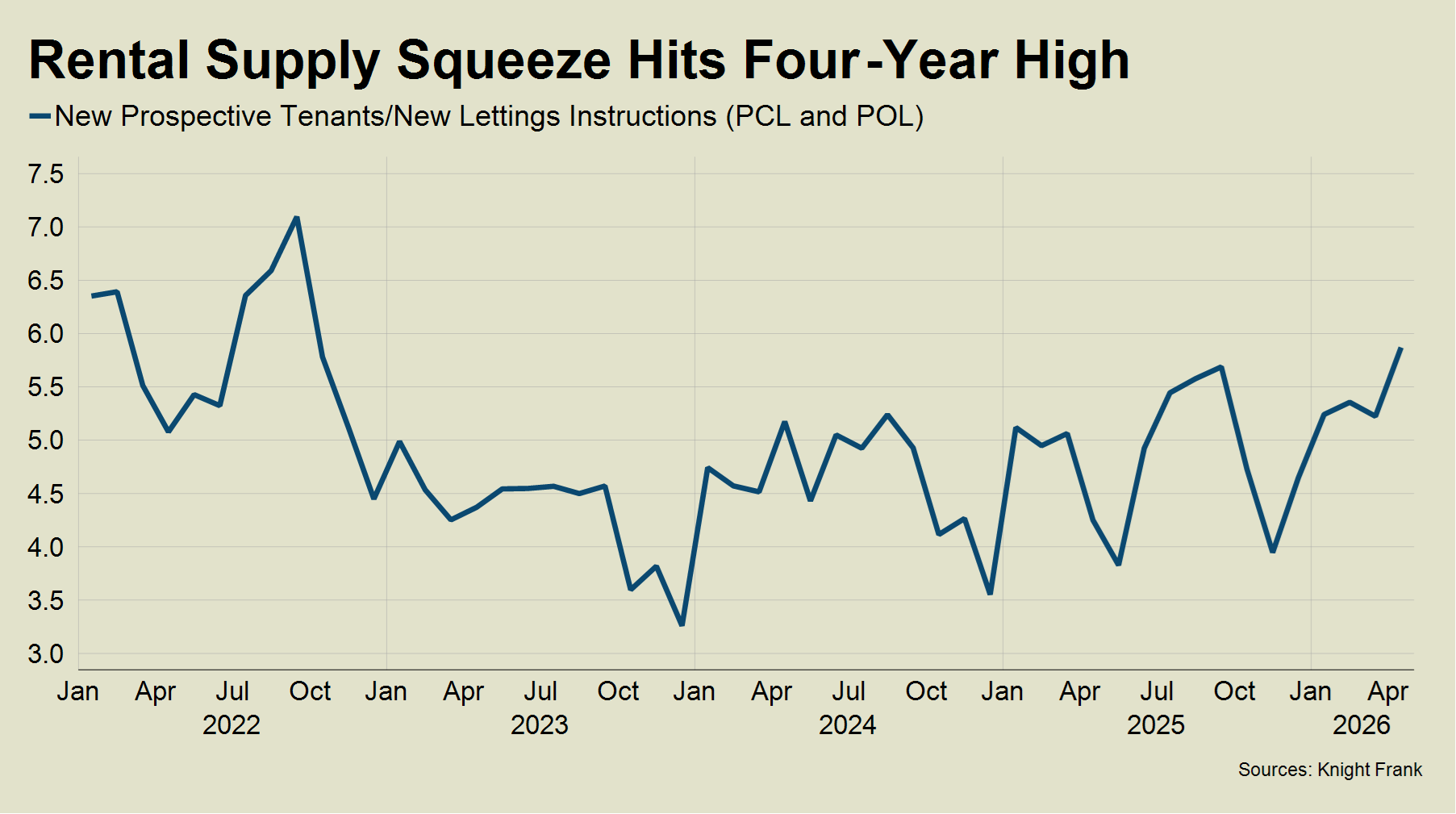
Rents across prime London markets rose ahead of the Renters’ Rights Act coming into force on 1 May, as landlords reacted to incoming changes affecting the private rented sector.
The legislation introduces reforms covering rent increases, possession rules and the sale of tenanted properties. In response, some landlords chose to sell properties or recover possession before the changes took effect, contributing to the tightest rental supply conditions seen in four years.
Other landlords simply increased rents to offset higher compliance costs and growing financial pressures.
Latest market data shows average rental values in prime outer London increased by 3% in the year to April — the strongest annual growth recorded since June 2024.
“Rental growth is being driven by a tightening supply backdrop,” said Mel Constantinou, head of lettings in south-west London and the Home Counties at Knight Frank. “The Renters’ Rights Act is accelerating this, as landlords refine pricing strategies and, in some cases, exit the market further constraining supply, while tenants increasingly stay put as choice continues to narrow.”
Average rents in prime central London increased by 1.1% in the year to April. Supply has been less constrained in higher-value markets as more discretionary owners let out their property due to the current weakness in the sales market.
Either way, the number of lettings listings in PCL and POL in Q1 2026 was 15% below the five-year average, Rightmove data shows. Underlining the imbalance between supply and demand, there were 5.9 new prospective tenants for every new rental listing in April, Knight Frank data shows. It was the highest figure since September 2022.
The Renters’ Rights Act is the latest in a series of obstacles that have faced landlords in recent years, which have included higher rates of stamp duty and the ending of tax breaks.
Average rents in PCL are 30% higher than a decade ago, while there has been an 25% increase in POL over the corresponding period.

Comments are closed.