




Nationwide Building Society has released its April House Price Index, providing a fresh snapshot of activity in the UK housing market at the start of spring.
It shows that UK house price growth strengthened last month, with annual inflation rising to 3.0%, up from 2.2% in March.
Robert Gardner, Nationwide’s chief economist, said: “UK annual house price growth picked up to 3.0% in April, from 2.2% in March. Prices increased by 0.4% month on month, after taking account of seasonal effects.
“Despite the uncertainty caused by developments in the Middle East and the subsequent rise in energy prices, the UK housing market has continued to regain momentum following the slowdown recorded around the turn of the year.
“This is somewhat surprising given that indicators of consumer confidence have weakened noticeably. GfK’s headline index has fallen to its lowest level since late‑2023, reflecting households’ more pessimistic views of the economic outlook and their own financial position over the year ahead.”
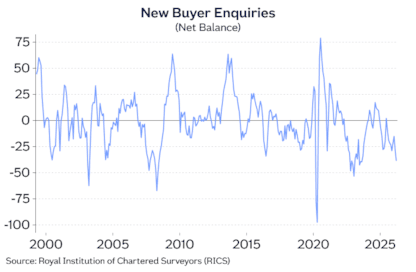
Measures of housing market sentiment have also deteriorated. The Royal Institution of Chartered Surveyors reported a sharp fall in new buyer enquiries in March, taking the index to its weakest reading since 2023. This softening is likely to have been influenced by higher market interest rates following the onset of the conflict, alongside a more uncertain backdrop.
Why is the market proving so resilient?
According to Gardner, the market is likely being supported by the relative strength of household finances. In aggregate, household debt is at its lowest level relative to income for around two decades, and sizeable savings buffers have been built up in recent years, although these have not been evenly distributed across households.
Moreover, housing affordability had been improving steadily in recent years due to a combination of income growth outpacing house price growth by a wide margin and a modest decline in mortgage rates.
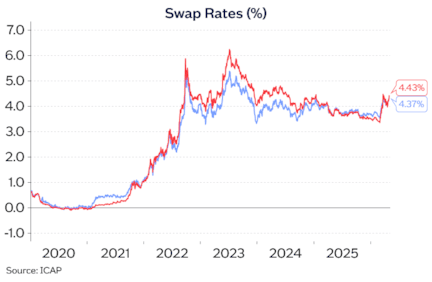
“While market interest rates have risen in recent months, the impact on affordability has so far been limited. Indeed, swap rates, which underpin fixed‑rate mortgage pricing, remain well below the highs reached in 2023 and are broadly in line with levels prevailing in late‑2024, implying only a partial reversal of earlier gains,” Gardner added.
Where next?
Looking ahead, Nationwide says UK economic growth is likely to be somewhat weaker and inflation higher than previously expected as a result of developments in the Middle East, although the ultimate impact will depend critically on the duration of the shock and the policy response.
However, the UK economy and housing market have proved remarkably resilient in recent years. This provides some confidence that, if the latest shock passes relatively quickly, and energy prices normalise in the quarters ahead, any near-term softening in the housing market will also prove short lived.
Verona Frankish, CEO of Yopa: “Despite the rate of monthly house price growth slowing, property values remain higher than both this time last month and when compared to this time last year.
“This highlights just how strong the UK property market is when you consider the wider economic landscape, not to mention global turbulence.
“It’s also important to remember that last year’s market was heavily influenced by the rush to secure stamp duty savings ahead of the end of March deadline and so what we’re seeing now isn’t weakness, but a return to more sustainable conditions.
“With mortgage rates trending in the right direction over the longer term, this should continue to support stability as the year progresses.”
Jason Tebb, president of OnTheMarket: “Despite the challenging economic backdrop, the housing market continues to demonstrate the resilience it has become known for. Average prices edged up slightly as focused buyers are price-sensitive and negotiating hard, while sellers realise that they will struggle to sell over-priced homes.
“Those who need to move are continuing to transact and will be buoyed by lenders trimming their mortgage rates in recent days. The Bank of England’s decision to hold interest rates for another month should also have a steadying effect on momentum in the market, suggesting stability and no need to panic.
“Increased stock, as sellers try to take advantage of what is usually a busier spring market, is giving buyers more choice than has been the case for a while and this should help keep prices in check.”
James Nightingall of HomeFinder AI: “Buyer activity increased throughout the first quarter of 2026 but quieted down at the beginning of April. Some house hunters merely took a break to enjoy the Easter holidays but others ceased this opportunity to arrange viewings or put in an offer. Although buyer interest remains steady overall, the property market hasn’t seen the spike in activity usually associated with Spring as interest rates and geopolitical developments continue to fuel uncertainty.”
Nathan Emerson, CEO of Propertymark: “While the latest Nationwide House Price Index shows house prices continuing to edge upwards, this reflects a market still heavily influenced by constrained supply rather than a sharp surge in demand. Stock levels remain limited across many areas, meaning even modest levels of buyer activity can translate into upward pressure on prices.
“From a market perspective, this signals cautious but improving sentiment, rather than a renewed boom. Affordability remains a key constraint, with higher mortgage rates continuing to cap the pace of growth. As a result, the market appears to be stabilising in a low-growth environment, where structural supply issues are doing much of the heavy lifting on pricing.”
Amy Reynolds, head of sales at Antony Roberts: “The underlying need to move remains strong and, for well-priced, high-quality homes, demand continues to hold up. In terms of pricing, the closer the asking price is to true market value, the greater the likelihood of securing a successful sale. Buyers are not stretching to make offers they don’t believe will be accepted – they are simply choosing alternative properties.
“In certain price brackets, buyers have the luxury of choice and vendors need to be mindful of this. While the wider economic backdrop may temper the pace of growth, we are seeing a more price-sensitive market where realism and accurate positioning are key.”
Mark Harris, chief executive of mortgage broker SPF Private Clients: “Lenders continue to trim their mortgage rates, and the steadiness from the Bank of England in holding interest rates should lead to a period of calm after much volatility.
“Borrowers are taking nothing for granted, however, with many choosing to secure rates in advance of when needed for peace of mind. Others are keen to proceed with already-reserved rates while they have them.”
Iain McKenzie, CEO of The Guild of Property Professionals: “The latest figures from the Nationwide HPI are a clear sign that the housing market is continuing to rebuild momentum after a softer start to the year.
“While global uncertainty has created a more cautious backdrop, the UK market has remained notably resilient. The Bank of England’s decision to hold the interest rate, will further help to anchor confidence even as inflationary pressures persist.
“Encouragingly, mortgage markets are also showing signs of improvement. Although borrowing costs have experienced some volatility in recent weeks, a number of lenders are sharpening their pencils and introducing cuts to their mortgage products. This renewed competition will help to further improve buyer sentiment and should support activity through the coming months.”
Tom Bill, head of UK residential research at Knight Frank: “The impact of rising mortgage rates on house prices will be more gradual than sudden as offers that pre-date the conflict work their way through the system, which is why we have downgraded our price forecasts for this year marginally.
“Borrowing costs have been volatile in recent weeks, underlining the high degree of uncertainty that exists over how long the war lasts, to what extent it escalates and the impact of second round effects on inflation.
“Markets are pricing in two further hikes in Bank Rate this year, but the Bank of England appears as uncertain as anyone else about what comes next and looks content to sit on its hands for now.”
Marc von Grundherr, Director of Benham and Reeves: “Whilst house price growth has picked up to 3.0% annually, performance so far this year has remained relatively modest, which reflects a market that is moving forward, but without the urgency seen in previous years.
“However, this shouldn’t detract from the underlying strength of the market. Buyer demand remains present, transactions are completing and, with yesterday’s decision by the Bank of England to hold the base rate, many homebuyers will feel reassured when it comes to committing to a purchase.
“This should help to sustain a steady level of activity over the coming months.”
Chris Hodgkinson, managing director of House Buyer Bureau: “While house prices have edged up, the reality on the ground is that the market continues to stagnate. Buyer demand has cooled, sellers are sitting on the market for longer and we’re seeing more transactions fall through as uncertainty continues to weigh on sentiment.
“This disconnect between price growth and market activity highlights the fragile nature of current conditions and, without a meaningful improvement in affordability, it’s likely that this subdued level of performance will persist in the near term.”
Islay Robinson, CEO of Enness Global
“The resilience seen in house price growth is notable given the current geopolitical backdrop, but at the very top end of the market, global uncertainty has inevitably led to a more cautious approach from some international buyers.
“That said, the UK continues to be viewed as a stable and attractive destination for capital. For high-net-worth investors, real estate here offers long-term security and relative value, and while activity may be more selective in the short term, confidence in the UK as an investment avenue remains firmly in place.”

Comments are closed.