The government’s new £4.7bn Your First Home scheme has come under fire from many property professionals, who warn it could delay purchases, expose buyers to negative equity and do little to stimulate the wider housing market.
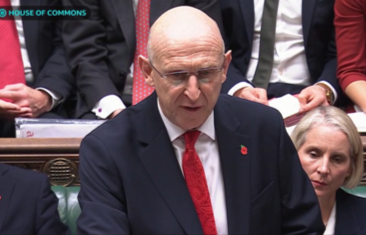
Announced in chancellor John Healey’s Autumn Statement, the scheme will offer eligible first-time buyers in England a government equity loan of 20% towards a new-build home, allowing purchases with deposits as low as 2.5%.
The loans will be interest-free for five years, with interest charged at 1.5% in year six and 3% from year seven.
However, concerns are mounting over the risks for buyers entering the market with minimal deposits, the potential impact of developer fees on house prices and the scheme’s limited reach.
Analysts also warn that the April 2027 launch could encourage first-time buyers to postpone purchases, creating a five-month slowdown in new-build sales.
Anthony Codling of RBC Capital Markets estimates that the £4.7bn funding package will support around 14,000 purchases annually, less than half the annual rate achieved under Help to Buy II.
For estate agents, there is a further concern. By restricting assistance to new-build homes, the scheme may do little to stimulate transactions across the wider resale market.
‘A catalyst, but not the catalyst we had hoped for’
Anthony Codling, RBC Capital Markets, said: “Your First Home provides ‘a’ catalyst, but not ‘the’ catalyst we had hoped for. The funding level of £4.7bn over 5 years equates to volumes of c.14,000 p.a., less than half of the annualised run rate of Help to Buy II. As the Chancellor sat down from his budget speech we felt rather deflated, and the housebuilder share prices soon to followed suit.
“We appreciate that the government is having to finely balance multiple calls on the public purse, but we thought that first time buyers and their own housebuilding targets were short-changed by the Budget.
“The April 2027 start date may also create a first-time buyer vacuum for the next five months, putting short term downward rather than upward pressure on new build volumes, the opposite of what the government may have intended. We think it is a missed opportunity leading to fewer first homes than hoped for.”
‘The right aim, but the wrong answer’
Charlie Lamdin, housing market commentator and founder of BestAgent, warned that buyers could be left financially exposed by the scheme’s low deposit requirement.
He commented: “Leaving aside the fiscal devolution curve ball, there was nothing in this Budget to move the housing market much. There were no changes to stamp duty, capital gains tax or lending rules.
“Your First Home has the right aim, but it’s the wrong answer. A 2.5% deposit means buyers start with almost no equity. If prices dip, they’re in negative equity from day one.
“The loan is free for five years, then it isn’t. On a £60,000 loan, that’s an extra £75 a month in year six and £150 a month after that, on top of the mortgage. And the loan grows with the price of the home, so you pay back more if prices rise.
“Developers paying up to 4% a sale won’t just absorb it. I’d expect that cost to find its way into new-build prices, and buyers will end up paying it.
“It’s new builds only, so it mainly helps housebuilders. It should have covered any home.
“Fiscal devolution needs a lot more explaining, because as it stands it makes rich areas richer and poor areas poorer. The minimum wage rise will cost jobs, and that’s bad for buyer demand.
“So for the market as a whole, very little changes. The best we can hope for is a bit of a pick-up before Christmas, so people who need to move can get moved.”
London affordability caps raise concerns
Adam Cradick, head of London Living at Land, welcomed the principle of supporting first-time buyer demand but questioned whether the scheme would work across different housing markets.
He explained: “It’s encouraging to see the government recognise that increasing housing delivery isn’t just about boosting supply. People also need to be able to buy the homes being built, so demand-side support for first-time buyers is a positive step.
“However, getting the detail right will be critical if the scheme is to have the intended impact. Any income or house price caps need to reflect the realities of local housing markets, particularly in places like London, where affordability challenges are greatest and development viability remains under significant pressure. While there is still room for improvement, it’s positive to see income caps set at £140,000 and a property value cap of £650,000 in inner London.”
Cradick also questioned whether the proposed lower property value cap in outer London would work in practice.
He warned that the April launch could delay purchases and that developer contributions must not undermine the viability of new housing projects.
Will the scheme help the wider housing market?
Mark Lawrinson, operations director of residential sales at Beresfords Group, and John Lineham, managing director of Flagstone Financial, said:
“The proposed £4.7 billion Your First Home Scheme, expected to launch next spring, could be a significant step for first-time buyers who do not have the ‘bank of mum and dad’ to rely on. With the scheme reportedly offering eligible buyers an equity loan towards a new-build property with a deposit of 2.5%, alongside plans for a First Time Buyer ISA to replace the Lifetime ISA, there are encouraging signs of support for those struggling to get onto the property ladder.
“While the proposed scheme could provide valuable support for first-time buyers looking to get onto the property ladder, its wider impact on the housing market may be limited. As the initial purchases are likely to focus on vacant new-build properties, the scheme may do little to stimulate movement across the wider market, where transactions often depend on existing homeowners selling and moving on to their next property.”
For estate agents, the distinction matters. A first-time buyer purchasing an existing property can trigger a chain of transactions, helping other homeowners move.
A purchase of a vacant new-build home, by contrast, may generate no corresponding transaction in the resale market.
With the scheme not due to launch until April, agents and developers now face uncertainty over whether buyers will press ahead with purchases or wait for government assistance.