



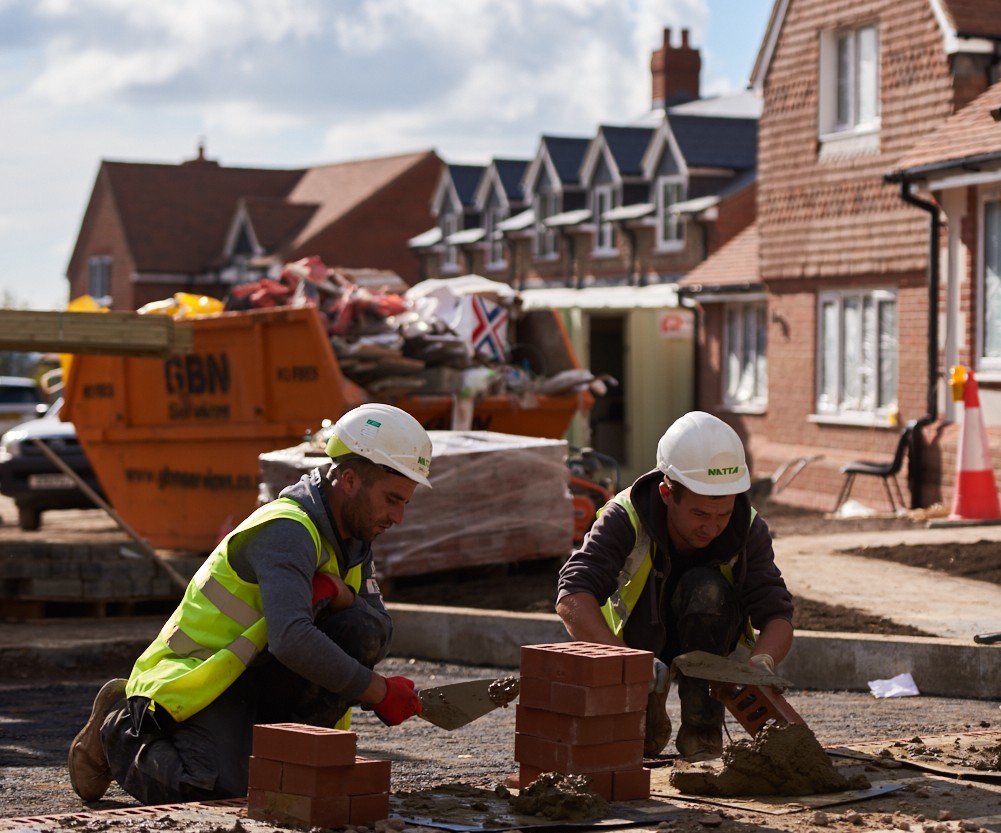
 The housing sector faced significant challenges in 2025. Delays to long-term grant funding created a pause in commitments to new sites scheduled for delivery beyond March 2028, leaving many affordable housing providers unable to progress schemes and slowing planning activity more widely. At the same time, weaker open-market conditions required developers to adapt their approach.
Despite this, the drive to deliver new homes remained strong, prompting a level of innovation not typically seen in the sector. Partnerships between developers, registered providers and investors played a key role in keeping schemes viable and mixed-tenure projects on track.
According to Mark Leaf, chief growth officer at Strata, here are the key trends to watch in 2026:
1. Planning reform that finally speeds things up
A significant shift will come from planning. With decisions now regularly taking up to two years, compared to just 16 weeks seven years ago, the system is overdue for reform. The current Bill intends to cut this backlog and free up resources within planning teams.
Leaf said: “If delivered as intended, this will give partners greater certainty on deliverability and funding. For housing associations and local authorities, the ability to hit critical grant deadlines more easily could be transformative. It also introduces the potential for longer-term prosperity planning rather than short-term firefighting.”
2. Affordable housing demand will rise
Announcements around social and affordable housing funding will continue to play a defining role.
“We’re expecting increased demand not just for affordable units on open-market schemes, but for fully affordable and mixed-tenure developments,” Leaf continued. “The sector’s appetite for this type of delivery is strong, and the right funding environment could unlock increased momentum.”
3. Open-market uncertainty will continue
Mortgage availability and interest rates remain unpredictable.
Leaf commented: “We saw how quickly market confidence shifted in 2025, and it’s reasonable to expect the same volatility in 2026 unless something radical changes. Developers will need to stay agile, and mixed-tenure models will be a stabilising force once again.”
4. Build-to-rent will plateau
Single-family build-to-rent has grown rapidly, but Leaf expects a levelling-off.
He continued: “Several factors will drive this including slowing rental inflation, stronger tenant protections through the Renters’ Rights Act, and higher tax burdens.”
“Buying may become more attractive than renting for many households, while investor appetite could soften. This could reduce the volume of BTR housing, but it puts greater value on strong, long-term partnerships which offer high quality, sustainable homes to rent.”
Comments are closed.