



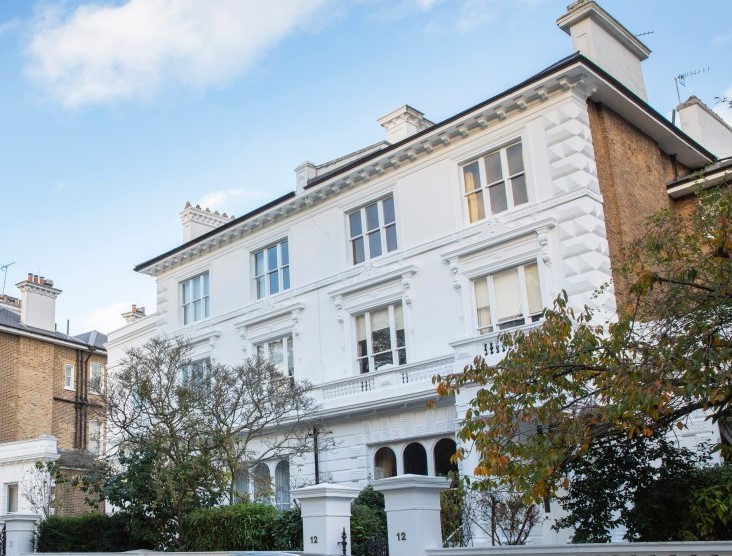
 Prime property price falls slowed in the first quarter of 2026, while sales activity held up across much of the market, according to Savills.
Values in prime central London declined by 0.7% over the three months to March, an improvement on the previous quarter, while country house prices slipped by 0.3%. Across regional markets, quarterly falls were more limited, suggesting the pace of decline is easing after sharper drops seen earlier in the cycle.
At the same time, transaction levels showed signs of resilience. Data from TwentyCi indicates activity in February rose above year-earlier levels for the first time since September, with agreed sales in March also higher than a year ago across both the wider market and £1m-plus segment.
Despite this, Savills said caution has returned to prime markets, with pricing remaining under pressure even as demand persists among a smaller pool of committed buyers.
Prime property price movements to end of March 2026
| Q1 2026 | Q4 2025 | Annual growth | Quarterly change (£, Q1 2026) | Annual change (£, Q1 2026) | |
| Central London | -0.7% | -0.9% | -4.8% | -£33,300 | -£227,100 |
| Outer London | -0.5% | -0.2% | -1.9% | -£8,200 | -£33,400 |
| Regional | -0.2% | -0.6% | -3.9% | -£4,400 | -£73,200 |
| Country Houses | -0.3% | -0.6% | -7.8% | -£13,900 | -£363,500 |
Source: Savills prime sales index, Q1 2026
“Earlier this year, the outlook for the spring market was promising. Inflation was easing, a rate cut seemed all but certain, and the property tax debate appeared to have been put to bed,” commented Frances McDonald, director of research at Savills.
“Despite the events of the past month, activity levels still look robust, supported by more motivated buyers, though smaller in number, and those looking to lock into mortgage offers and agree deals in anticipation of further rate rises. However, it has given buyers another reason to approach with caution.
“As a result, prime values are continuing to ease back, albeit at a slower pace, at a time when we might have conservatively expected them to bottom out, if not pick up.
“For buyers who can see through the current disruption and take a medium-term view, properties at the top end remain good value, with prices not far off where they were pre-pandemic in many cases. But, with so much uncertainty about where things go from here and the financial markets so reactive, sellers will need to be realistic on pricing this Spring.”
South West and West London buck broader trend
In London, the South West and West prime housing markets proved the most resilient, remaining flat over the quarter. Areas including Teddington, Wimbledon and Fulham saw prices edge up at the start of the year, bucking the broader trend.
But overall, the value of prime properties in London’s more domestic markets fell by 0.5%, according to Savills. Price sensitivity is likely to persist in the coming months, particularly given this market’s exposure to higher mortgage costs.
Savills survey of agents already points to a clear shift in sentiment, with both buyers and sellers significantly less confident than they were at the end of Q4, when markets most exposed to potential Budget tax changes experienced a degree of relief.
“Recent events are likely to reinforce the UK’s status as a safe haven, particularly within an attractively priced prime central London market where values are down 25% compared to their 2014 market peak. However, this must be viewed in the context of a changing tax environment,” said McDonald.
“As a result, demand is more likely to come from overseas buyers seeking a London bolthole, rather than a broad return of non-domiciled residents. At the same time, higher stamp duty costs are expected to moderate any upward pressure on prices, with early signs suggesting some of this demand is instead being diverted into the capital’s prime rental sector.”
Regional £2m-plus market responds to ‘better than feared’ Budget
Prime markets across the Midlands, North of England and Scotland saw price growth in the first quarter, says Savills, reflecting the fact that they are less reliant on mortgage debt than elsewhere.
Across all prime regional markets, values are down by 0.2% on the quarter, and by 3.9% on the year.
Notably, pressure had eased at the very top end of the prime regional market (£2m-plus) in response to changes to the tax environment being better than feared. While values are down 6.9% on the year, they dipped by just 0.6% on the quarter, as markets began to bottom out.
“Improved sentiment across regional markets risks being short lived as mortgage rates climb in response to economic disruption. But total impact will ultimately depend on the length of the conflict,” continued McDonald.
“In the short term, a smaller pool of committed buyers will look to take advantage of reduced competition and value on offer. Even so, sellers this spring and summer will need to stay realistic on pricing. Current evidence suggests the long-anticipated recovery in the prime market will take longer than expected to gain momentum.”
