 The gap between rental yields in North and South England narrowed during the second quarter of 2026, according to Fleet Mortgages’ latest Rental Barometer.
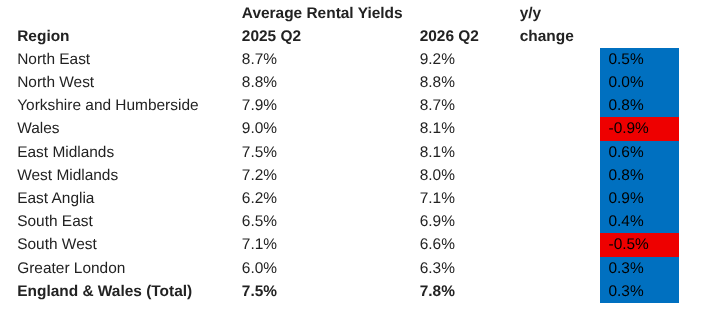
The lender said average rental yields across England and Wales rose by 0.3 percentage points annually to 7.8% in the second quarter, although this was down from 8.1% in the first quarter of 2026.
The North East continued to offer the highest average rental yield at 9.2%, despite a 0.6 percentage point fall compared with the previous quarter. Yorkshire and Humberside recorded a 0.3 percentage point decline, while yields in the West Midlands fell by 0.6 percentage points.
By contrast, yields in Greater London increased from 6.1% to 6.3% during the quarter, while the South East remained unchanged at 6.9%.
Fleet said the figures suggested the traditional North-South divide remained but was becoming less pronounced as rental yields in higher-yielding northern regions began to plateau.
The lender also reported signs of improving activity in the buy-to-let market. Purchase business increased from 33% of mortgage applications in the first quarter to 36% in the second, while more than 62% of applications came from portfolio landlords with four or more properties. Limited company borrowing accounted for 78% of all applications.
Fleet said mortgage markets had experienced significant volatility during the early part of the quarter as financial markets reacted to the conflict in Iran and rising swap rates. However, it said conditions improved later in the quarter, allowing lenders to reduce mortgage rates and reintroduce products withdrawn during the period of market uncertainty.
Steve Cox, chief commercial officer at Fleet Mortgages, said: “One of the more interesting themes from this quarter’s Rental Barometer data is that the gap between North and South does appear to be narrowing slightly, which suggests opportunities continue to exist across a much broader range of locations.
“Equally encouraging is the way the wider mortgage market has recovered over the course of the quarter. We started Q2 dealing with significant uncertainty as funding costs rose and pricing came under pressure, but conditions have improved considerably in recent weeks, allowing lenders to reduce rates and expand product choice once again.
“That creates a much more positive backdrop for landlords than appeared likely earlier in the quarter. Tenant demand remains strong, purchase activity has picked up again and professional landlords continue to invest where they see long-term value.”