



 National rental growth has slowed to near zero as new rent control powers come into force in Scotland’s private rented sector.
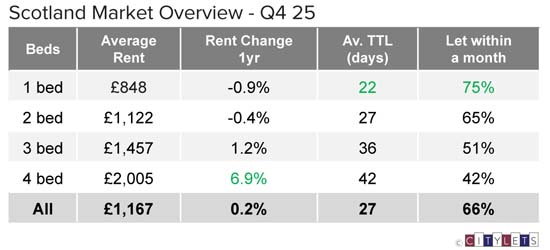
The latest Citylets report shows annual rental inflation fell from 4.4% at the start of the year to 0.2% by year-end. The slowdown coincided with the debate and passage of new rent controls under the Housing (Scotland) Act 2025.
“The timing is of more than passing interest”, noted Thomas Ashdown, MD of Citylets, “Rental price inflation has been steadily cooling as affordability limits were reached and better market balance returned. Policy moved in one direction whilst the market moved decisively in the other.”
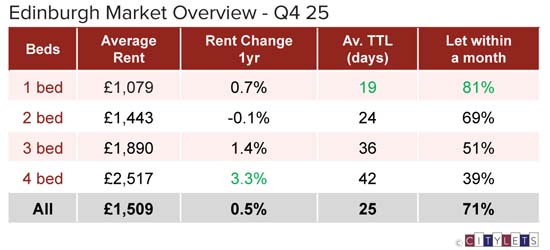
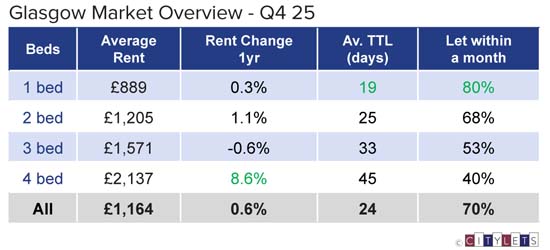
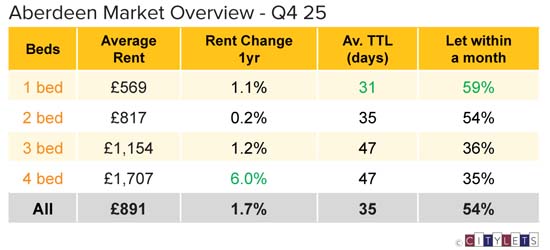
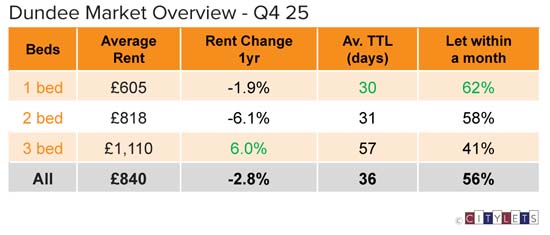
After years of steady increases, rents in Scotland’s major cities were largely flat throughout 2025, with changes staying close to zero except in Dundee. Affordability, rather than strong demand, has become the main factor influencing rental growth.
This shift follows a turbulent period in the Scottish private rented sector, during which open-market rents rose sharply amid limited supply – a shortage largely linked to emergency legislation restricting rent increases within existing tenancies.
“What we are now currently at risk of”, continued Ashdown,“ is previous policy-led market anomaly potentially informing future policy. It is absolutely imperative that analyses put forward by councils for their local market conditions both recognises and mitigates for the data during that emergency legislation era.”
The passage of the Housing (Scotland) Bill came amid global economic instability, driven by abrupt US trade tariff shifts and persistent geopolitical disruption. UK macroeconomic conditions, however, supported the sector. Inflation fell steadily throughout 2025, while interest rates declined, delivering material relief to mortgaged landlords.
Commenting on the developments, Gillian Semmler, PR manager for Citylets said, “in a world of almost constant heightened uncertainty, a period of relative stability in the rental market would be a stabilising influence. Falling inflation, easing borrowing costs and a better balance between supply and demand have given the market a chance to breathe after years of extreme pressure.”
Comments are closed.