
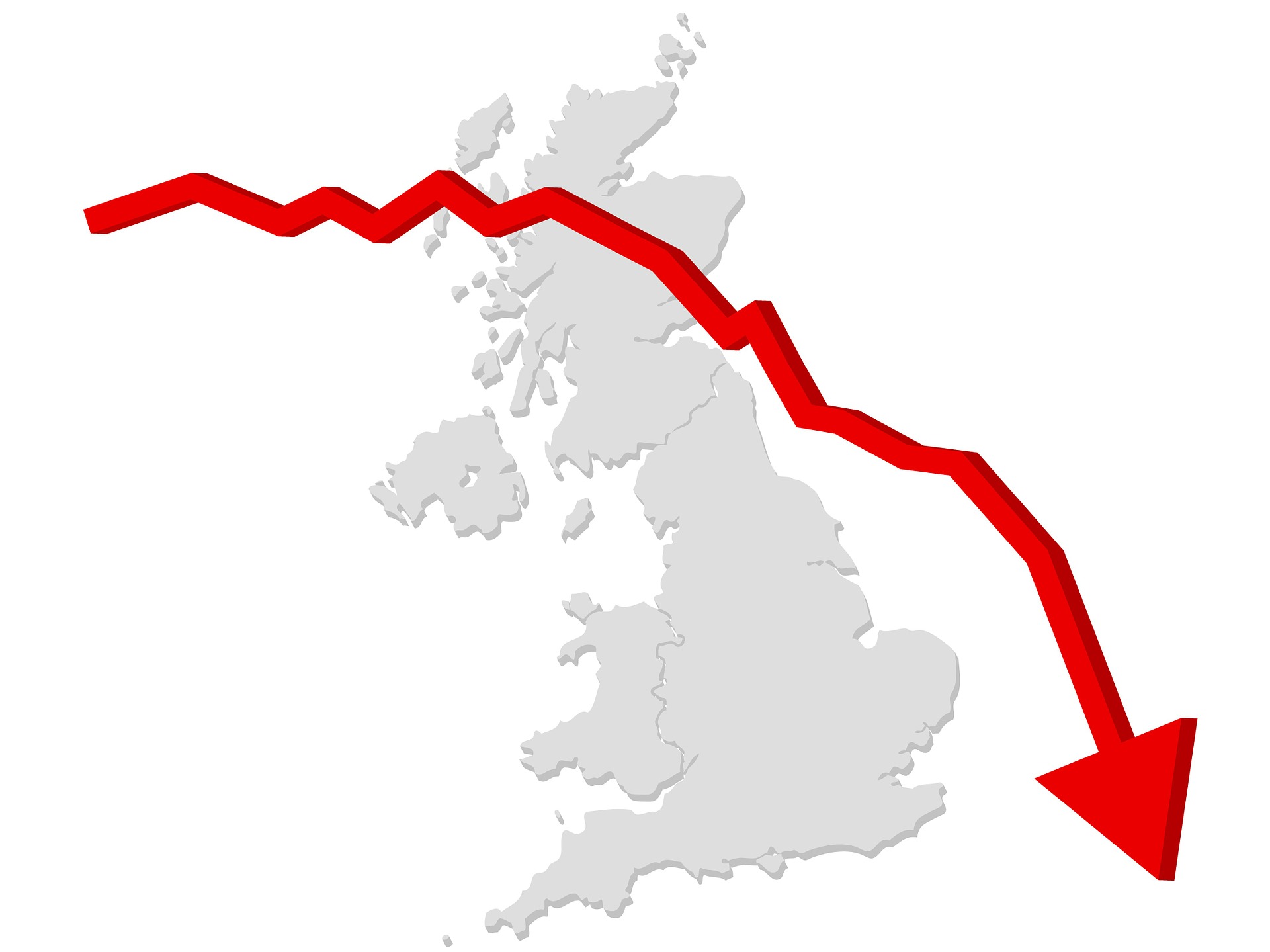
 UK house price growth has slowed to its weakest pace since January 2024, with Nationwide warning that the market faces further pressure in the coming months.
Annual house price inflation fell to just 0.5% in October, down from 0.8% in September, according to the building society’s latest House Price Index.
Prices were unchanged month-on-month, following a revised 0.3% decline in September.
The average UK property price slipped to £273,566, down from £274,251 the previous month.
The figures point to a housing market struggling for momentum, with weak buyer demand and rising mortgage costs continuing to weigh on activity.
Mortgage pressures mount
Nationwide chief economist Robert Gardner said economic uncertainty was affecting both house price growth and market activity.
“Market activity and house price growth have slowed in recent months, in part reflecting the uncertain economic backdrop. Geopolitical tensions remain high, with the conflict in the Middle East exerting upward pressure on energy prices, fanning inflation concerns.
“This in turn has led to mounting financial market expectations of Bank Rate increases, which have maintained upward pressure on the market interest rates which underpin mortgage pricing.”
The prospect of higher borrowing costs presents another challenge for estate agents, particularly as buyers remain sensitive to mortgage affordability.
More weakness to come?
Gardner warned that the outlook remains subdued, with little indication of an immediate recovery in buyer demand.
“Forward-looking indicators suggest further softness in the near term. Surveyors report that new buyer enquiries remain weak. Moreover, consumer sentiment dipped noticeably in October, with households becoming less confident about the outlook for the general economy as well as their own financial situation in the year ahead.”
However, Nationwide believes the market could regain momentum once the current energy shock subsides.
Gardner pointed to resilient economic growth, relatively stable employment and rising real incomes as reasons for longer-term optimism.
Household debt also remains close to 20-year lows relative to disposable income.
He added: “Moreover, the improvement in housing affordability seen over the past two years has been only partially unwound as a result of higher market interest rates, as income growth has continued to outpace house price growth by a wide margin.”
For estate agents, the latest figures underline the challenge of maintaining sales activity as buyers face renewed uncertainty over mortgage rates and the wider economy.








Comments (1)
PE, could we please have something positive to read.The industry is labouring under such negativity with the constant delivery of everything that is bad news and the threat of the dangers lurking and yet to come. It’s very damaging and not helpful. Most of what is impacting the industry right now is beyond our and our customers’ control. But what is in our control is to be positive with out clients to find a way forward for those we really need to move and also to support them positively and emotionally. We can’t do that if we are on our knees with negativity. So give us a leg up and start positing some positive articles please.