
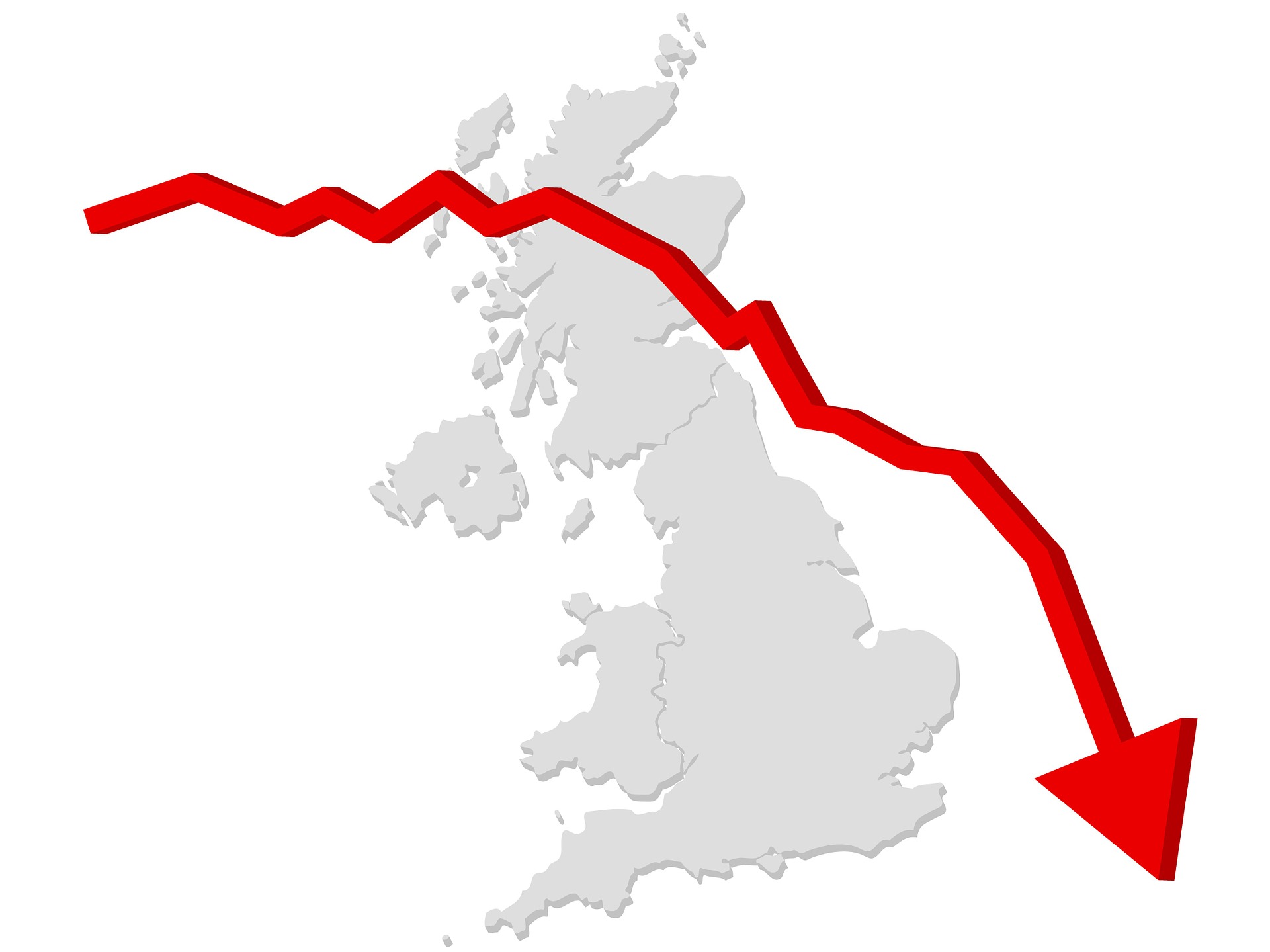
 Home sellers are cutting asking prices at the fastest pace in 15 years, as rising mortgage costs and growing competition force vendors to reassess their expectations.
More than 3,000 properties had their asking prices reduced every day during September, according to Rightmove figures obtained by the BBC.
The average reduction was almost 7%, equivalent to around £21,000 on a typically priced home.
Meanwhile, 34% of listed properties have undergone a price reduction, close to the recent peak of 36% recorded in September 2023.
The figures come as buyer enquiries fall, sales agreed decline and the number of homes for sale reaches a 12-year seasonal high.
Overpriced homes take three times longer to find buyers
Rightmove’s research highlights the consequences of launching properties at unrealistic asking prices.
Homes requiring a price reduction took an average of 119 days to find a buyer.
By contrast, properties marketed without a reduction secured a purchaser in just 39 days.
That means reduced properties spent more than three times as long searching for a buyer.
Colleen Babcock, Rightmove’s property expert, warned that reductions can also raise questions among prospective purchasers.
“Once a home has been on the market for a while and then has a price reduction, some buyers start asking questions, even when there is nothing wrong with the property,” she said.
“In a market with so much choice, first impressions matter.”
Mortgage costs add £250 a month
The pressure on sellers comes as mortgage rates continue to rise.
Rightmove’s latest House Price Index shows the average two-year fixed rate has reached 5.55%, up from 5.29% last month.
Before the Iran war began in February, the equivalent rate stood at 4.25%.
According to Rightmove, the increase has added around £250 a month to the cost of a typical new mortgage.
The impact is now spreading to some of Britain’s cheapest housing markets.
New sellers in four of the five lowest-priced regions reduced their asking prices in October.
The North East recorded the largest monthly fall at 2%, followed by Scotland at 1.9%.
Prices also declined in the North West (-0.6%) and Wales (-0.3%). Yorkshire and the Humber recorded a modest 0.3% increase.
Despite these regional falls, average asking prices across Britain rose 1% in October to £371,015.
However, they remain 0.1% below the same month last year.
Buyer demand weakens as stock builds
Across Britain, sales agreed are running 8% below the same period last year.
Buyer enquiries have also fallen 9%, while new listings have increased 3%.
Consequently, the number of properties for sale has reached its highest level for this time of year since 2014.
The growing choice is giving purchasers greater negotiating power and increasing competition between sellers.
London illustrates the uneven conditions facing agents.
Asking prices in the capital rose 2.5% in October, following a 6% decline across July and August.
However, prices remain 1.7% below October 2025.
Some 38% of London properties have undergone asking price reductions. Homes take an average of 78 days to find a buyer, while just 42% of listings secure one.
Agents face growing pricing challenge
Babcock said: “The rapid rise in mortgage rates is really beginning to hit buyers’ budgets.”
She added: “This is a stark reminder of how price-sensitive the market is, and the message from agents, backed up by our data, remains the same – that competitive pricing from day one of marketing is critical to capitalise on initial buyer interest.”
The forthcoming Budget could add further uncertainty, particularly if buyers delay decisions while assessing potential changes to their finances.
For agents, the latest figures underline the risks of overpricing in a market where purchasers have more choice and borrowing costs remain elevated.






Comments (1)
Asking prices in the capital rose 2.5% in October, its due to idiot f*****g agents giving stupid valuations. 2 bed flat in development where nothing has sold over £400k, agent goes in at £495,000, 3 weeks later reductions start