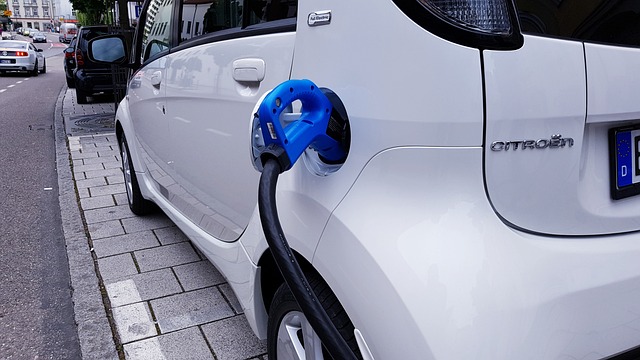
 The government’s decision to remove VAT from household electricity bills from October could widen the cost gap between homeowners who can charge electric vehicles (EVs) on their driveway and those who rely on public charging.
Under the changes announced by prime minister Andy Burnham, the current 5% VAT rate on domestic electricity will be removed for six months, reducing the cost of charging an EV at home.
Drivers using off-peak home charging tariffs could see running costs fall to around 1.5p per mile, according to industry estimates.
However, households without off-street parking will continue to pay substantially more. Public charging remains subject to 20% VAT, with rapid charging potentially costing around 16p to 20p per mile, depending on the vehicle and charger used.
The disparity has renewed calls for the government to equalise VAT rates on public and domestic EV charging, with industry groups arguing that households without driveways are being unfairly penalised.
The issue is particularly significant for the property sector, where access to off-street parking is increasingly viewed as a key consideration for buyers and renters considering the switch to electric vehicles.
Electric Vehicles UK said the latest tax changes risk increasing the inequality between households with and without private parking, warning that drivers who cannot charge at home have little choice but to pay significantly more for the same electricity.
Tanya Sinclair, chief executive of Electric Vehicles UK, told the Press Association: “Millions of drivers without off-street parking have no choice but to pay 20% VAT when charging in public, while those with a driveway will now pay none at all.
“If this Labour government is serious about a fair transition, it cannot ask EV drivers to pay different prices for the same electricity simply because of where they live.”
RAC head of policy Simon Williams commented: “We urge the new Prime Minister to give serious consideration to lowering VAT on public EV charging, so that those without driveways can make the switch to electric motoring more affordably.”