



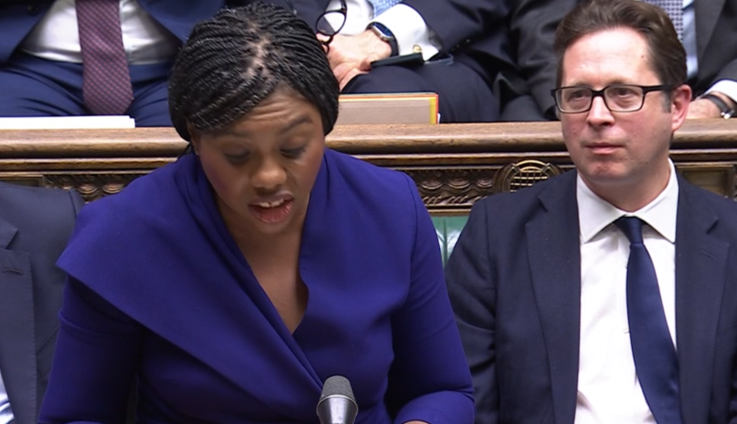
Kemi Badenoch has launched a fierce attack on the chancellor after Rachel Reeves unveiled plans to hike property taxes for landlords – a move the Conservative leader says will leave tenants footing the bill.
Responding to the Budget in the Commons, Badenoch warned that Reeves’s decision to raise taxes on rental income would push landlords out of the market and drive rents even higher, at a time when millions are already struggling with record costs.
She told MPs the move was “short-sighted” and would “hit renters hardest”, insisting the chancellor’s tax strategy would shrink supply and force up prices.
Reeves’s Budget, delivered on Wednesday, confirmed a two-percentage-point increase in tax rates on property, savings and dividend income from April 2027 – a change that will notably increase the tax burden on landlords and reshape the rental market.
The chancellor told MPs: “Currently, a landlord with an income of £25,000 will pay nearly £1,200 less in tax than their tenant with the same salary because no National Insurance is charged on property, dividend or savings income.”
“It’s not fair that the tax system treats different types of income so differently, and so I will increase the basic and higher rate of tax on property, savings and dividend income by two percentage points, and the additional rate of tax on property and savings income by two percentage points.
“Even after these reforms, 90% of taxpayers will still pay no tax at all on their savings.”
Badenoch attacked the policy announcement in her response to the Budget, saying: “Hiking tax on landlords will only push up rents. It will push landlords out of the market – the people who will suffer are the tenants.”
The Office for Budget Responsibility’s fiscal outlook also warned that the policy could lead to increasing rents, stating: “The measures announced in this Budget reduce returns to private landlords, following various measures over the past 10 years that have also reduced returns.
“This successive eroding of private landlord returns will likely reduce the supply of rental property over the longer run. This risks a steady long-term rise in rents if demand outstrips supply.”
I agree with Kemi here.
However we’ve also been saying this about the Renters Reform bill – that it’s pushing landlords away and so the tenants will pay the price – and that was introduced by the Conservatives!
You must be logged in to like or dislike this comments.
Click to login
Don't have an account? Click here to register
For clarity: HMRC has been aware for over a decade that it has been failing to collect around £2bn a year in tax from the private rented sector.
That spans 12 years of Conservative government and now well over a year of Labour control.
And let’s not rewrite history.
It was under George Osborne that the first sustained policy attacks on private landlords began — not because rents were too low or the market was “unfair”, but to deliberately re-shape the sector to favour institutional landlords: banks, insurers and pension funds.
So if we’re going to be treated to party-political soundbites, let’s at least be honest about the record.
What’s being claimed now — that this is about fairness or reform — doesn’t match what’s actually happened to the PRS for the past13 years
You must be logged in to like or dislike this comments.
Click to login
Don't have an account? Click here to register
The fact is LL are fleeing the market there is a shortage of property which is driving rents up TODAY
You must be logged in to like or dislike this comments.
Click to login
Don't have an account? Click here to register
If you actually look at the timeline, this isn’t complicated.
Landlords didn’t suddenly “flee”.
They started exiting when Section 24 was introduced in 2017.
That policy removed mortgage interest relief for individual landlords and phased it out by 2020. From that moment on, highly-leveraged portfolios stopped being viable — even while interest rates were still low.
Interest rates didn’t rise meaningfully until 2022.
Section 24 hit five years earlier.
So the exodus began first because of tax treatment.
Rising rates then accelerated something that was already happening.
Add in:
Higher compliance costs
Tighter lending rules
Stamp duty surcharges
Licensing schemes
…and you had a sector being slowly unwound by design.
What you’re seeing in rents today is the lagging effect of a decade of Conservative policy decisions — not a surprise event and not a single Labour Budget.
You must be logged in to like or dislike this comments.
Click to login
Don't have an account? Click here to register
If you think there has not been an increase in LL selling particularly since the changes in tax and legislation and tenants right in recent years you are dreaming
You must be logged in to like or dislike this comments.
Click to login
Don't have an account? Click here to register
Between 2023 and 2024, an estimated 65,000 landlords exited the market, and a further 93,000 are expected to leave in 2025, many small, amateur landlords are choosing to cash in their investments
With fewer properties available to rent and high tenant demand, rents are very high.#
The National Residential Landlords Association (NRLA) has warned that the exodus could worsen the country’s homelessness crisis, as landlords selling up is a major cause of homelessness for existing tenants
You must be logged in to like or dislike this comments.
Click to login
Don't have an account? Click here to register
The workers must pay for the shirkers.
You must be logged in to like or dislike this comments.
Click to login
Don't have an account? Click here to register
Vote Labour pay tax to support the idle
That is socialism
You must be logged in to like or dislike this comments.
Click to login
Don't have an account? Click here to register
Another monumentally cretinous statement!
Well done, you’re on a roll.
You must be logged in to like or dislike this comments.
Click to login
Don't have an account? Click here to register