



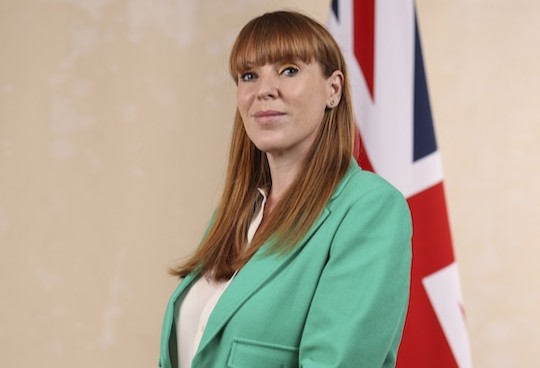
Following the news that Angela Rayner underpaid stamp duty on her Hove property, Greg Tsuman, managing director of lettings at Martyn Gerrard and former president of ARLA Propertymark, has weighed in on what the case reveals about deeper systematic issues.
Tsuman argues that the situation underscores just how complex and confusing the UK’s property tax system has become – even for senior government figures.
“If the secretary of state for housing doesn’t know what she is supposed to owe in property taxes, how can anyone else be expected to?,” asked Tsuman.
He continued: “This case exemplifies how byzantine the system for taxing property and income in this country has become. It is a shame that the government is now investigating how it can add further charges and regulations, because there is already too much complexity. The result is cases like this, where rules are broken either because they’re too difficult to understand or they’re so onerous that it incentivises non-compliance.”
Tsuman also points to what he sees as a growing inconsistency in how the government treats property matters. The Rayner case comes less than a month after fellow Labour MP Rushanara Ali resigned from the shadow frontbench for evicting tenants in order to raise rents – a move that drew public and political criticism.
“There seems to be a systemic hypocrisy at play,” Tsuman added. “These high-profile cases suggest we urgently need clarity and fairness in the way property is taxed and regulated – not just for politicians, but for everyone.”
“There seems to be a systemic hypocrisy in this government when it comes to housing,” Tsuman continued. “It is baffling that they’re doubling down on more taxes and tougher laws when the conduct of the Ministers in charge shows that they’re already unworkable.”
“Perhaps the government should look at ways to simplify and reduce these archaic property taxes and regulatory burden so that they’re easier to comply with,” he added. “If that would help individuals like Ms Rayner to pay their dues, then perhaps the move could even increase revenues for the Treasury.”
Can she survive? Angela Rayner faces sack calls in tax ‘hypocrisy’ storm
Like everyone else she asked two lawyers and got two different answers. If she consults a third, she might be advised to claim a refund on what she’s already paid. The case is more complicated than most and it’s not as if she was serving as chancellor while failing to disclose an HMRC investigation that brought a £5 million charge.
You must be logged in to like or dislike this comments.
Click to login
Don't have an account? Click here to register
Not only does this saga with Rayner illustrate the ridiculously complex property tax regime it also highlights the rank hypocrisy of Labour and Rayner in particular. Every family farmer will be in despair with changes proposed to IHT where they are to be taxed to prevent their homes and businesses being passed on to their children, whilst she (Rayner), goes to complicated legal lengths to set up a trust to ensure her home in Manchester can be protected from tax and passed on to her disabled son! Surely her understandable desire to protect her son’s future is exactly the same as those of farming families wish to protect their homes and livelihoods for following generations? It will be interesting to see how the chancellor’s autumn budget changes to CGT/IH rules are consistent with Rayner’s personal actions!
You must be logged in to like or dislike this comments.
Click to login
Don't have an account? Click here to register
A total hypocrite- red Angie is the Housing Minister, deputy PM ! What hope for the UK with this farcical government in power.
Roll on Novembers budget…….
You must be logged in to like or dislike this comments.
Click to login
Don't have an account? Click here to register
Firstly SDLT has become increasingly complex over the past 20 years, and this situation is anything but straightforward.
The issue of “retainer creep” really highlights how many additional areas of advice conveyancers are expected to cover during a transaction—the building safety act being another good example. It doesn’t seem fair to place so many advisory responsibilities on conveyancers simply because of their gold-plated PII and the high level of regulation in the profession.
Outsourcing SDLT advice and verification helps reduce that risk, ensures clients receive the correct guidance, and allows conveyancers to focus on the work they’re trained to do—while enjoying their role rather than worrying about hidden pitfalls.
The challenge, of course, is that qualified tax advice can often be prohibitively expensive for most purchasers. [Sentences removed as they breached posting rules about promoting a business via comment]
You must be logged in to like or dislike this comments.
Click to login
Don't have an account? Click here to register
As far as I’m aware, solicitors/lawyers DO NOT advise on how much stamp duty someone has to pay, partly because it’s complex and they don’t want to provide the wrong information, but mainly because SDLT is the buyers SOLE RESPONSIBILITY. You are completing a tax return. If she did speak to a lawyer she would almost certainly have been referred to a tax advisor for specialist and accurate advice.
You must be logged in to like or dislike this comments.
Click to login
Don't have an account? Click here to register
Its very simple. If there is any doubt then you pay it. There is the facility to claim back several years after if it transpires that it was not needed to be paid. This is simple avoidance. Our advice to all is to pay rather than looking at avenues not to and then getting caught out.
You must be logged in to like or dislike this comments.
Click to login
Don't have an account? Click here to register