



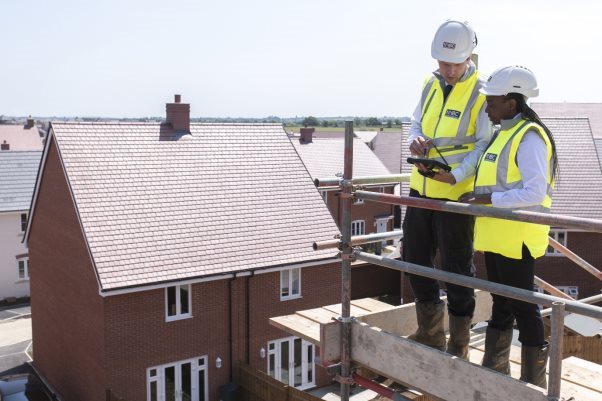
 The UK government’s housebuilding target is under growing pressure as the pace of new construction continues to fall sharply.
The latest data reveals a significant drop in the number of homes being built, raising concerns that the country may struggle to meet its housing needs – and the government’s goal of delivering 1.5 million new homes during this parliament – over the coming years.
According to the latest PMI data by S&P and CIPS, the headline construction PMI for November has decreased significantly to 39.4, down from 44.1 in October. The headline index is now below 40 for the first time since the pandemic, and at levels normally only seen in times of crisis.
Housebuilding fell significantly to 35, while civil engineering is only just above 30.
Atul Kariya, head of real estate and construction at MHA, said: “Last month marked the eleventh consecutive month with a PMI below 50, and the steepest contraction since May 2020, so at 39.4 it’s no surprise we are still in contraction territory. The sector continues to operate under significant pressure.
“The (long anticipated) Budget offered construction firms some grounds for cautious optimism, particularly in areas like workforce development, investment incentives and infrastructure support. But the underlying reality remains the same: rising labour costs, ongoing planning delays, global headwinds and the potential dampening effect of a mansion tax are still weighing heavily on sentiment. Core construction activity continues to be slow, and with weak demand and a thin pipeline of new projects, any improvement is likely to be slow and steady.
Beyond immediate construction activity, the sector faces growing structural pressures that continue to constrain growth. The Renters Reform Bill and extra taxes on private landlords are adding uncertainty to residential investment, while rising compliance and licensing costs squeeze already-tight margins. Rapid increases in the National Minimum Wage (up around 17–18% over two years versus roughly 12% for median pay) is also narrowing the gap with pay for skilled trades and pushing wage costs higher. Together, these pressures make long-term planning, recruitment and retention increasingly difficult for firms.
Thames Water’s recent announcement of £20.5bn and OGEM’ £28bn investment over the next five years is welcome news and will help drive growth in infrastructure. However, our clients consistently tell us is that stability, clarity, and predictability in policy are essential. Construction companies, investors and lenders plan on a three, to five year horizon, yet changes introduced in a single Budget can recalibrate the economics of a project overnight.
As we move into the final stretch of the financial year, firms are still looking for the certainty that enables long-term investment. The sector has shown its resilience time and again, but it can only convert that resilience into growth when operating in a stable environment.
Kelly Boorman, national head of construction at leading audit, tax and consulting firm RSM UK, said: “The headline construction PMI dropped significantly in November, to the lowest level since the pandemic. Housebuilding sank to levels only seen in the pandemic and financial crisis, demonstrating the frustration felt by housebuilders and lack of demand for new homes.
“Civils fell below 40, which demonstrates nervousness ahead of the budget and fears around the impact of tax rises for the construction market. However, pipelines are now the largest they’ve ever been, so the current measure is not in line with sentiment today, and we would therefore expect to see this rising in future.
“In the Autumn Budget the chancellor continued to support the message of delivering funding for major infrastructure projects in rail, road, energy, education and healthcare and tax impact was seen to be deferred. Civil contractors therefore remain upbeat about their project pipelines, and we are seeing infrastructure projects begin to mobilise.
“However, uncertainty remains for housebuilders around the impact of the budget, with the new mansion tax coming in 2028, and additional 2% property income tax also on the horizon. These changes will impact property portfolios for landlords, and rental prices for tenants, making it potentially harder for young people to get a foot on the first rung on the property ladder, with no further incentives offered for help to buy.
“The new mansion tax will hit properties valued from £2m upwards, which will stimulate the market at the higher end, as people are encouraged to downsize to below the tax threshold before the change comes in. This could also boost housebuilding volumes at the lower end of the market, although we still expect house prices to be impacted, and these are forecast to be flat until 2028.”
She added: “The budget brought some disappointment to housebuilders, who hoped measures would be taken to reform the Stamp Duty Land Tax (SDLT) regime, which could have helped significantly stimulate the industry.”
Thomas Pugh, chief economist at RSM UK and Ireland, added: “The drop in the headline construction PMI to just 39.4 is yet another piece of evidence that pre-budget speculation about large tax rises was having a significant negative impact on business confidence.
“Admittedly, output in the construction sector probably wasn’t as bad as the drop in the PMI indicated, and now that we know there won’t be major tax rises next year, confidence should return. But it doesn’t bode well for growth in Q4, where there is a real risk of flatling or even a contraction. Looking ahead, the construction sector should start to improve, as confidence improves after the budget, and interest rates come down a little further.”

Comments are closed.